Happy Friday, and welcome to Food Fix. I’m just back from New York where we did a live taping of Forked with Tom Colicchio at the Brooklyn Museum hosted by the Food & Environment Reporting Network. It was a great discussion — we talked about the midterms, the future of restaurants, GLP-1s, consolidation in the meat industry and so much more. Listen to the conversation!
Scheduling note: This newsletter will publish as normal on Tuesday next week (for paid subscribers) but will be off next Friday. I’m turning 40 and taking a bit of time off!
Don’t miss out: The best way to make sure you don’t miss a beat in food policy is to upgrade to a paid subscription and get Food Fix in your inbox twice per week. Almost everyone who upgrades finds it valuable. Upgrade today.
As always, I welcome your feedback. Send me your thoughts by replying to this email, or drop me a line: helena@foodfix.co.
Alright, let’s get to it –
Helena
***
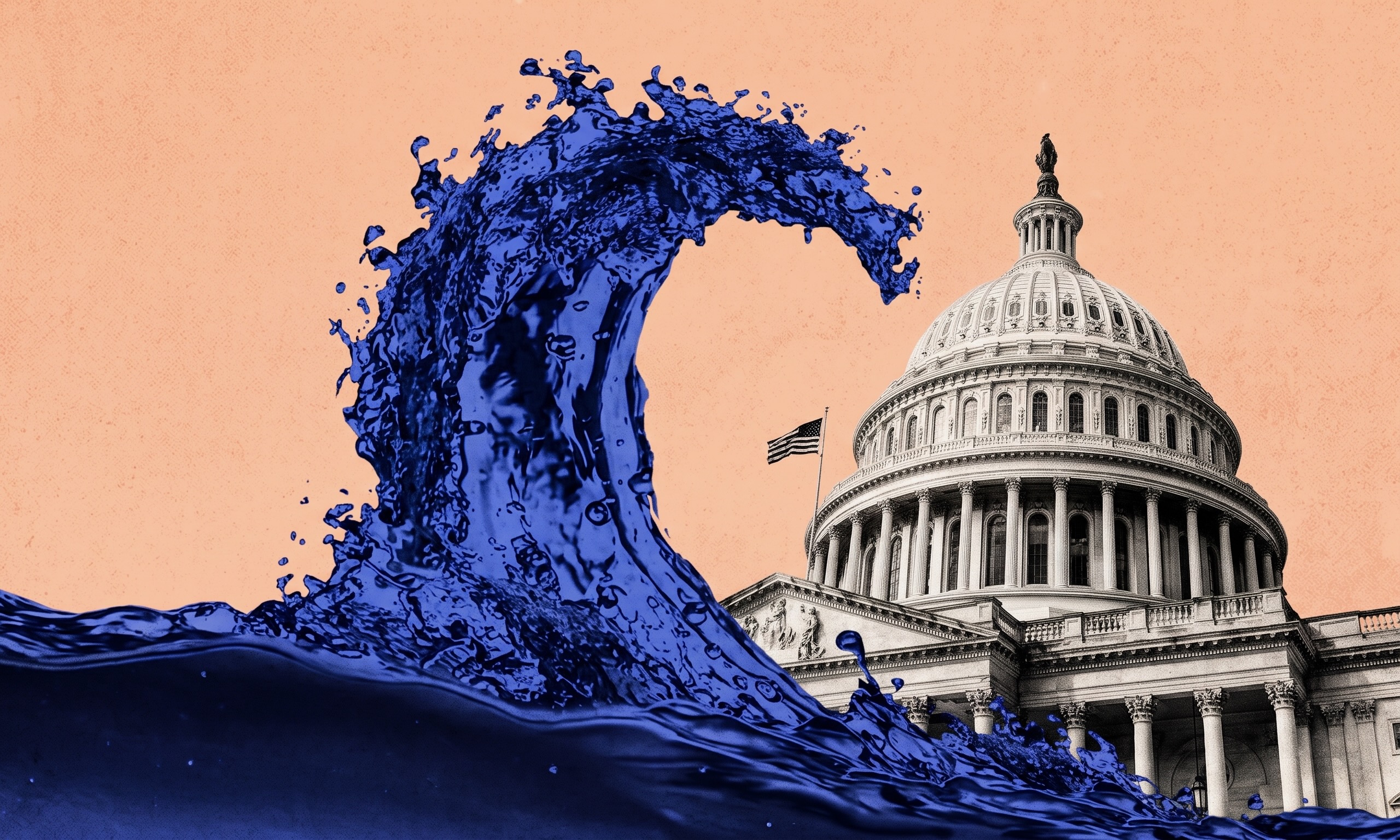
How the ‘bluenami’ midterms shake up the food policy landscape
As the dust settles on Tuesday’s massive win for Democrats — a blowout that some are now dubbing the “bluenami” — the question now becomes: What happens next?
With Democrats set to take decisive control of both the House and Senate, we know the dynamics in Washington are about to change in a significant way. Instead of having one-party control, we’re entering an era of divided government. Everyone is still trying to figure out exactly what this means, but in the food policy lane a couple of themes have emerged so far:
Food prices matter a TON. Food prices are hard to change. Frustration over the cost of food (and so much else) was a top concern for voters on Tuesday and no doubt helped propel the wave, but now comes the really hard part: delivering lower prices. We don’t yet know what approach House and Senate Democrats will take to try to lower food prices, but it’s a tough thing to do.
As Rogé Karma recently noted in The Atlantic: “Unfortunately, most ideas in circulation for how to bring down grocery costs, such as city-run grocery stores and price controls, would hardly make a dent in the issue.” Karma noted that there’s a new think tank called the Kitchen Table Project, “run by a group of left-leaning economists and policy wonks” which is now floating a public option for food purchasing.
Another option is for Democrats to zero in on market concentration and consolidation, whether it’s beef processing, retailers or foodservice companies — these moves would signal to voters that Congress cares about these issues, but such efforts are also long slogs that are not likely to yield short-term price relief.
MAHA-MAGA marriage is hanging on by a thread. Much has been written this week about how badly MAHA did in the midterms — and it was certainly brutal. The candidate MAHA groups put the most money and energy behind was Zach Lahn, the remarkably anti-Big Ag Republican gubernatorial candidate in Iowa. Democrat Rob Sand handedly beat Lahn 55 to 44 percent, per the latest results, and is now slated to be the first Democratic governor in Iowa in 20 years.
What comes next for MAHA remains to be seen, but we should know a lot more in the coming weeks. What I’m watching for: What Democrats say, if anything, about MAHA issues and what approach the Trump administration takes with HHS Secretary Robert F. Kennedy Jr. — is he on an even shorter leash and on the way out? Is there a YOLO tour? I have no idea.
Democrats face a decision about how to handle RFK Jr. With the MAGA-MAHA marriage on the rocks, to say the least, Democrats in the House and the Senate face an important question about how to approach Kennedy. Do they spend political capital investigating or even impeaching him? The steady drumbeat of alarming news about measles (there was another death this week) is a major factor here, and we’re seeing some early hints of interest.
Sen. Angela Alsobrooks (D-Md.) this week re-upped her call to oust Kennedy from office: “The time is now. RFK Jr. must resign or be fired. End of discussion,” Alsobrooks wrote on X Wednesday.
Alsobrooks has long been a vocal critic of Kennedy, so this isn’t altogether surprising, but I noticed that key MAHA advocates have been quick to forcefully push back on this idea.
“Dear Democrats – This is not how you win a coalition or work together,” wrote Vani Hari, aka Food Babe, on X responding to Alsobrook. “This is how you waste time while our children continue to get sicker than any developed nation. GO after the special interests. GO after the corporate capture. GO after the people in the OMB that stop good policies from getting to the finish line. GO after the fing corruption! EXPOSE these people with all your might!”
Michigan Senator-elect Abdul El-Sayed told CNN this week he wants to investigate Kennedy over the government’s handling of the massive cyclospora outbreak tied to lettuce last summer.
El-Sayed said he wants to probe the “decision-making” behind the cuts at public health agencies and what role that has played in the string of recent food recalls. Over the summer, Michigan reported 15,472 cases of cyclospora, including 379 hospitalizations and two deaths — by far the highest case count of any state.
“This is not about retribution for something past,” El-Sayed told CNN anchor Kate Bolduan. “This is about understanding what happened, holding people accountable for what they did and then solving the problem moving forward.”
MAHA hints at willingness to work with Democrats. Amid all this chatter, Tony Lyons, a close ally of Kennedy who runs several outside MAHA political groups, said Wednesday that MAHA is open to working with Democrats.
Lyons said on the weekly MAHA Action call on Wednesday that the movement would “partner with absolutely everyone who’s willing to partner with us — companies who will listen, politicians who will work with us from any party, activists, influencers, MAHA moms in every corner of the country.”
Lyons added: “There are good people across the political spectrum who want to be part of this, and we’re going to find every last one of them and fight with them.” This is a change of tune from a group that exclusively backed Republicans this cycle.
The farm bill is headed for a shakeup. It’s going to be a while before we know exactly how the ‘bluenami’ election alters the path ahead for the farm bill — as I’ve previously written, farm bills are just getting harder as Congress grows increasingly dysfunctional — but the power dynamics have just shifted in a big way. Democrats now have a lot more leverage in their standoff over SNAP policy.
As Jake Zajkowski over at DTN reported: Sen. Chuck Grassley (R-Iowa) this week “broke with the notion that Republicans would not consider a two-year SNAP cost-share extension to win Democratic support for the farm bill.”
“I hate to talk about compromising on getting fraud out of food stamps, but there may be some sort of compromise. We’ll have to do with the Democrats to get 60 votes to get the bill out,” he told reporters Tuesday. “It’ll take some compromise, maybe on this food stamp issue.”
As DTN noted, Senate Agriculture Committee Chairman John Boozman (R-Ark.) has previously called the one-year SNAP cost-share delay Republicans’ and the White House’s final offer. Of course, that was before the midterm shakeup.
***
What I’m reading
RFK Jr. ally Russell Brand found guilty of rape and sexual assault (Politico). “Actor Russell Brand, a leading figure in Health Secretary Robert F. Kennedy Jr.’s Make America Healthy Again movement, was found guilty Thursday in the United Kingdom of raping one woman and sexually assaulting three others between 2004 and 2009,” Carmen Paun reports. “Brand was arrested after the verdict was announced and is facing years in prison … He will be sentenced on Monday. Brand has maintained his innocence, saying that all his sexual encounters were consensual. His lawyer did not immediately respond to a request for comment. The leader of Kennedy’s MAHA movement, Tony Lyons, has stood by Brand. Lyons, a longtime Kennedy friend and book publisher, went to London last month to attend the opening of the trial and had Brand on his weekly call with MAHA supporters as it got underway. ‘He’s been falsely accused, he’s been vilified, persecuted, deplatformed, demonetized, censored, prosecuted,’ Lyons said in introducing Brand, who has been a regular speaker on the weekly MAHA call for the past year. Lyons did not respond to a request for comment.”
Amy Acton, Annie Andrews and what Democrat wins mean for RFK Jr. and the MAHA movement (USA Today). “When Dr. Annie Andrews took the stage at the South Carolina Democratic Party’s Spratt Issues Conference in August, she made clear what her goals would be as senator,” report Madeline Mitchell and Alyssa Goldberg. “‘I believe we need to fully fund the CDC and the NIH, and I believe we need to impeach and remove RFK Jr.’ she said. On Nov. 3, Andrews became the first woman Senator elected in South Carolina. The pediatrician was joined by other Democratic medical doctors and health leaders elected to various offices across the country, including Ohio Governor-elect Dr. Amy Acton and U.S. Senator-elect Abdul El-Sayed in Michigan, both of whom have also publicly condemned Robert F. Kennedy Jr.’s health policies. A few Democrat elects aren’t enough to boot out the U.S. Secretary of Health and Human Services alone. But the tide has certainly shifted, experts say.”
US agriculture loses ground in congress as Democrats take control after 2026 midterms (AgroLatam). “U.S. midterm elections changed the balance of power in Washington, giving Democrats control of Congress while reducing the number of confirmed lawmakers with agricultural ties,” reports Marcus Ellington. “119 agricultural voices have secured seats in the incoming Congress, compared with 139 in the outgoing legislature. The preliminary results raise questions about how much direct farming experience will remain in Washington as lawmakers confront stalled Farm Bill negotiations, livestock market concerns and mounting pressure on farm profitability. The losses include Republican Senator Roger Marshall of Kansas and eight Republican House members. Their departure matters because lawmakers familiar with farming operations often bring practical knowledge to debates over commodity programs, crop insurance, conservation and rural development.”
Democratic midterm sweep points to major shifts in food and farm policy (Civil Eats). “Pressing food and farm issues helped propel Democrats to sweeping victories in Tuesday’s midterm election,” writes Lisa Held. “On CNN, Representative Hakeem Jeffries (D-New York), now poised to become the Speaker of the House, said one of Democrats’ first priorities will be to get President Donald Trump to end the war with Iran, in an effort to (among other goals) bring down high diesel and fertilizer prices, issues that have been at the forefront of concerns for many farmers. Trump will still have veto power, but in Congress, Democrats will take over steering the future of important legislation, including the farm bill, which is currently three years late and has stalled in the Senate, due to party-line disagreements over changes Republicans made to SNAP.”
Democrat Clayton Tucker wins Texas agriculture commissioner race (Texas Standard). “Clayton Tucker will be Texas’ next agriculture commissioner, the first Democrat to hold the office since 1990, after Republican Nate Sheets conceded the race Wednesday morning,” report Michael Marks and Naina Srivastava. “Tucker will lead a department with a wide range of responsibilities. The Texas Department of Agriculture regulates commercial scales, school lunch programs, hemp growing licenses, and management of various pests. It also handles federal grants that get passed on to the state’s farmers and ranchers. Tucker campaigned on fighting corporate monopolies and slowing data center development. In addition to data center policy, Tucker’s priorities include preserving family farms, lowering the cost of food, and making farming more profitable through rebuilding agricultural co-ops.”
Bird Flu could become a terrible feature of fall (The Atlantic). “At the beginning of November, Washington State announced that one of its residents had died from bird flu,” writes Roxanne Khamsi. “The announcement had an air of déjà vu to it: Around this time last year, another person in Washington State died of a related form of the virus—the third bird-flu death in the U.S. and the last reported fatality from the illness in the country until now. Autumn is beginning to look more clearly like the start of bird-flu season for livestock, and, by extension, the time of year that the spillover risk to humans could be highest. The question now is whether these patterns will hold—whether the dramatic rise of the flu among wild species may ultimately contribute to a seasonal uptick among farmed animals, which in turn could cause more cases in people each autumn.”
***
Why you should upgrade to a paid Food Fix subscription
Become a paid subscriber to unlock access to two newsletters each week, packed with insight, analysis and exclusive reporting on what’s happening in food, in Washington and beyond. You’ll also get full access to the Food Fix archive — a great way to get smart on all things food policy.
Expense it: Most paid subscribers expense their subscriptions through work. It’s worth asking!
Discounts: We also offer discounts for government, academia and students. See our subscription options. Individuals who participate in SNAP or other federal nutrition programs qualify for a free Food Fix subscription — just email info@foodfix.co.
Get the Friday newsletter: If someone forwarded you this email, sign yourself up for the free Friday edition of Food Fix. You can also follow Food Fix on X, Bluesky and LinkedIn.