Happy Friday, and welcome to Food Fix. I was very sad to learn that revered health and infectious disease journalist Helen Branswell recently died from cancer complications — such a terrible loss for journalism and for all of us trying to make sense of the world.
New American Dish: This week on the podcast, I talked to Rep. Chellie Pingree (D-Maine) about her work on food and ag issues in Congress, why she thinks Democrats should work with MAHA, where the farm bill is headed and more. Listen or watch wherever you get your pods.
Forked does NYC: Forked is hosting a live podcast taping at the Brooklyn Museum with special guest Tom Colicchio on Nov. 4. We’ll talk about the restaurant biz, Colicchio’s experience lobbying on food issues, the MAHA movement and, of course, the midterm elections. Get your tickets!
Don’t miss out: The best way to make sure you don’t miss a beat in food policy is to upgrade to a paid subscription and get Food Fix in your inbox twice per week. Almost everyone who upgrades finds it valuable. This week, I wrote about which groups are meeting with OMB about the government’s long-awaited definition for ultra-processed foods. Upgrade today.
As always, I welcome your feedback. Send me your thoughts by replying to this email, or drop me a line: helena@foodfix.co.
Alright, let’s get to it –
Helena
***
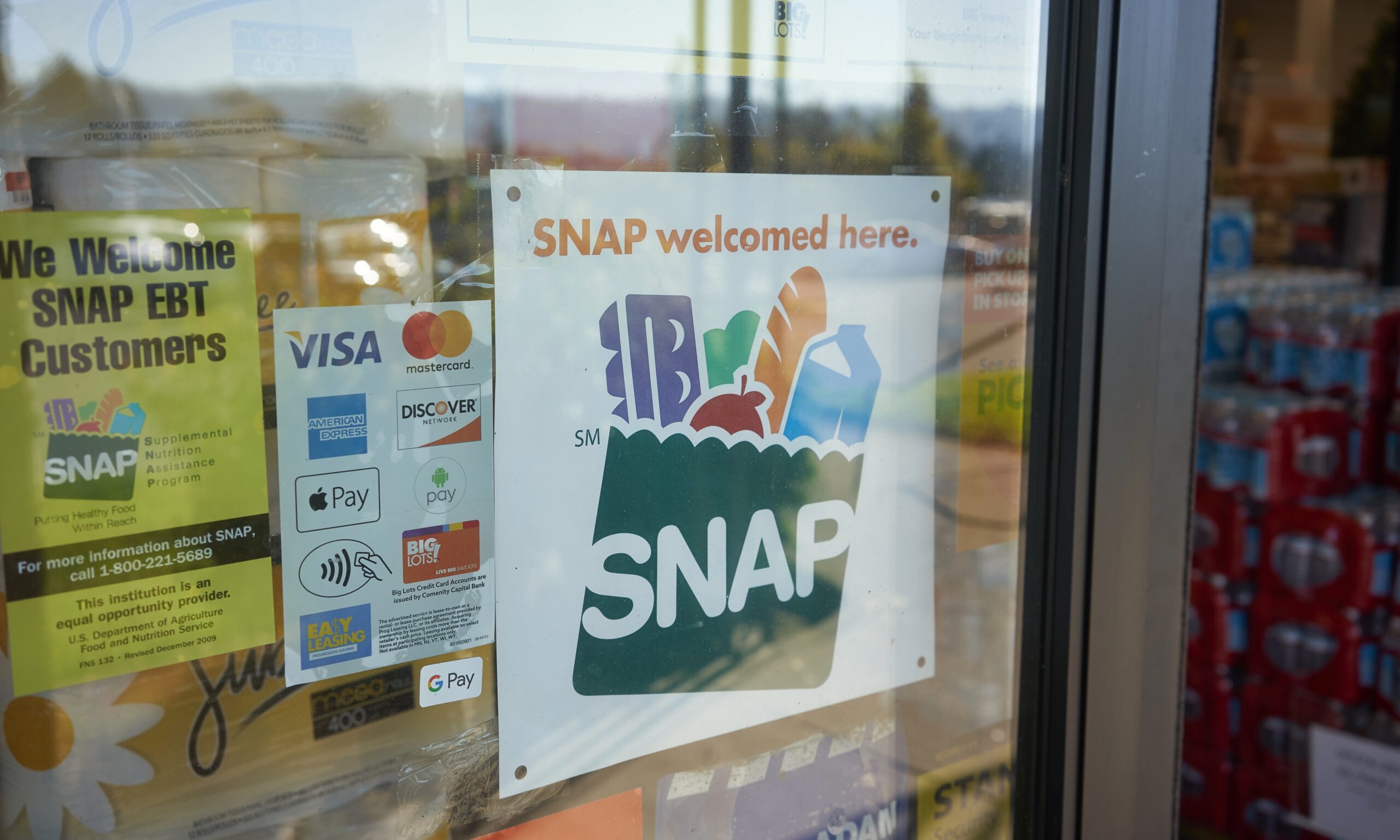
SNAP participation hits lowest point since the Great Recession
Participation in the Supplemental Nutrition Assistance Program (SNAP) has hit a nearly two-decade low in the wake of the Republicans’ big reconciliation package passed by Congress last year.
A new analysis by the Center on Budget and Policy Priorities this week noted that as of June 2026 (the most recent data available), national SNAP participation has hit its lowest point since August 2009 “when SNAP grew to meet increased need in the aftermath of the Great Recession.”
“The number of people receiving SNAP food assistance has declined sharply in recent months, even though there is no sign that the decline is due primarily to an improving economy,” write analysts Joseph Llobrera and Catlin Nchako. “Since the [reconciliation] law’s enactment, the number of people participating in SNAP has fallen by more than 5 million (13 percent), including about 2 million children.”
Refresher: That reconciliation law — formally dubbed the “One Big Beautiful Bill Act” or H.R. 1 — made the biggest cuts to SNAP spending in history. It shifted billions in new costs to the states, significantly expanded work requirements and ended eligibility for many people with lawful immigration status (like refugees and asylees). We do not know exactly how much of the SNAP exodus is directly because of these changes, but experts think it’s a significant factor.
Is it the economy? As I wrote this spring: SNAP was designed to expand and contract with economic conditions, so normally a contraction in the program is good news. Fewer people on the program usually means the economy is improving and households need less help meeting basic needs. But most economists agree that’s not what’s happening right now.
National unemployment rates have remained pretty steady and flat during this time, which suggests it’s not labor market participation that’s driving the exodus. Food banks are also reporting increased demand, which suggests that the need for assistance is growing.
Working as intended: Republicans tend to see the shrinking of SNAP as a good thing. For their part, the data show the reconciliation law is working as intended. (One could argue it’s actually working better than intended because far more people are dropping from SNAP than the Congressional Budget Office initially projected.)
Over at the Cato Institute, Romina Boccia and Tyler Turman argued recently that the drop in SNAP caseload is nothing to “mourn.”
“Judge the success of OBBBA’s SNAP reforms, and all welfare programs, by how many people move out of welfare and into self-sufficiency, not by how many are kept on it,” they wrote.
State by state: The picture is highly variable across the country. Some states have experienced much sharper drops. Participation in Arizona, for example, fell by more than 52 percent. In Oklahoma, Nevada and Louisiana, participation fell by more than 20 percent.
A good chunk of the disparity between states is based on how state agencies are responding to some of the changes in H.R. 1. The law for the first time put states on the hook for covering a portion of the SNAP benefit costs if their error rates are over a certain threshold (error rates are administrative mistakes, not a measure of fraud).
The law also significantly increased how much states need to pay to administer the program, which includes things like paying staff to field calls, review applications and audit payment accuracy. In the past, states and the feds shared the admin costs 50-50. As of this month, it shifted to 75-25, with states picking up more of the tab.
MAZON: A Jewish Response to Hunger put out a report recently contending that “less attention has been given to the fact that administrative spending levels for SNAP will greatly influence payment error rates.”
“Inadequate state or county funding for SNAP administrative costs can increase payment error rates, which may in turn lead to an increase in the share of SNAP benefits that a state must soon pay,” the group concluded.
Supporters of H.R. 1, meanwhile, have argued that these changes were needed to better incentivize states to reduce their error rates.
“For too long, SNAP has been framed primarily as an economic stimulus for local economies rather than as a pathway for households to escape poverty and expand opportunity,” wrote Angela Rachidi, a fellow at the American Enterprise Institute, last year. “Shifting a larger share of administrative costs to states will create a positive incentive by encouraging administrative efficiency.”
SNAP + midterms: As Eli Okun over at Politico noted last week, all of these changes to SNAP are coming ahead of a midterm election cycle where Republicans are facing a tough political environment, particularly with high food and fuel prices.
Democrats tend to think the SNAP cuts give them a good argument on the campaign trail. Republicans, meanwhile, may not lead with the SNAP cuts (preferring to instead highlight the tax cuts in the package), but they tend to defend the changes as right-sizing a program that had simply gotten too big.
***
What I’m reading
FDA’s infant formula standards revamp gets White House review (Bloomberg Law). “The Food and Drug Administration is advancing an effort to revamp regulations governing the nutrient profiles of infant formula products,” reports Skye Witley. “A proposed rule the agency filed Wednesday to the White House’s Office of Management and Budget represents the last stage before a regulatory update is published for public feedback on the Federal Register. The move is sure to kick off a flurry of meetings between the White House, infant formula companies, and other stakeholders interested in influencing the regulatory proposal’s early scope. The government hasn’t comprehensively reviewed infant formula nutrient standards since 1998.”
FGS Global continues its acquisition spree (Politico). “Strategic advisory firm FGS Global has acquired agriculture lobby shop The Russell Group — FGS’ third acquisition this year,” reports Jacob Wendler. “The Russell Group boasts a number of prominent ag, pharma and food players among its clients, including Kraft Heinz, Bayer and Cargill. It also reps industry trade groups including the Organic Produce Association, the National Grain and Feed Association and the American Trade Association for Cannabis and Hemp. FGS Global, the product of a 2021 merger between Finsbury Glover Hering and Sard Verbinnen & Co., has significantly expanded its K Street presence in recent months.”
Forty percent of high school students report binge eating in new CDC survey (STAT). “About 40% of high school students reported binge eating in the past month in a large new government survey, putting a spotlight on how widespread this common form of disordered eating is among young people in the U.S.,” reports Sarah Todd. “This is the first time the biennial survey, conducted by CDC, has asked about binge eating, and the first data on disordered eating collected by the Youth Risk Behavior Survey in a decade. The survey also found links between binge eating and frequent social media use (checking platforms at least hourly), poor mental health, and suicidality. The prevalence of binge eating also raises questions about Americans’ ultra-processed food environment, according to Lindsey Smith-Taillie, a nutrition epidemiologist at UNC Gillings School of Global Public Health. ‘Many of these foods are engineered for overconsumption,’ she said via email.”
Groups supporting RFK Jr. are spending nearly $2M in Iowa governor, House races (Politico). “MAHA groups are spending nearly $2 million ahead of the November midterms in an effort to elect candidates who have made Robert F. Kennedy Jr.’s movement targeting chronic disease a centerpiece of their campaigns,” Kelly Hooper reports. “The new spending is the most significant outlay from Kennedy-aligned groups since they helped Rep. Julia Letlow defeat Sen. Bill Cassidy in a Louisiana Republican primary in May. Cassidy had criticized Kennedy’s efforts to reduce the number of vaccines the government recommends. On Thursday, the MAHA PAC and MAHA Action PAC, two political action committees supporting candidates committed to the health secretary’s agenda, announced they donated a combined $1.65 million to support Republican Zach Lahn’s campaign for governor of Iowa.”
30 days after increased beef imports, US ranchers are getting paid less for cattle (Civil Eats). “One month after President Donald Trump announced the country would import more ground beef to lower consumer prices, supermarket beef prices have barely dropped, according to a new analysis,” Lisa Held reports. “Some American farmers and ranchers, however, are being paid much less for their cattle. The farmer advocacy group Farm Action released the analysis, which looked at USDA price data for the 30 days after the imports of cheaper beef began. During that time, the average retail price of ground beef decreased about 2 percent, by 13 cents per pound, from $6.92 to $6.79. At the same time, prices paid for to U.S. beef producers for two categories of cows sold into the ground beef market dropped 12.2 and 13.9 percent. ‘The first 30 days raise serious questions about whether this policy is actually delivering on its promises,’ Sarah Carden, senior director of research and policy at Farm Action, said in a press release.”
‘It’s time to get a vaccine in place’: RFK Jr.’s views helped stall bird flu plan (Politico). “Robert F. Kennedy Jr.’s anti-vaccine views were a major factor in shelving an Agriculture Department avian flu response plan, according to five people with direct knowledge of the matter, a pause that’s alarming lawmakers as wild birds begin migrating for the winter,” report Rachel Shin and Marcia Brown. “Agriculture Secretary Brooke Rollins rolled out a $1 billion five-point plan in February 2025 to tackle a record-breaking spread of avian influenza. Rollins later pulled back on an internal USDA strategy for vaccinating poultry and egg-laying hens initially intended to be shared widely with foreign countries and industry leaders. It’s not clear whether Kennedy urged Rollins to halt the plan, but she was concerned about whether it would clash with the Health secretary’s anti-vaccine views, according to the five people, all of whom were granted anonymity to discuss the internal dynamics.”
***
Why you should upgrade to a paid subscription
Become a paid subscriber to unlock access to two newsletters each week, packed with insight, analysis and exclusive reporting on what’s happening in food, in Washington and beyond. You’ll also get full access to the Food Fix archive — a great way to get smart on all things food policy.
Expense it: Most paid subscribers expense their subscriptions through work. It’s worth asking!
Discounts: We also offer discounts for government, academia and students. See our subscription options. Individuals who participate in SNAP or other federal nutrition programs qualify for a free Food Fix subscription — just email info@foodfix.co.
Get the Friday newsletter: If someone forwarded you this email, sign yourself up for the free Friday edition of Food Fix. You can also follow Food Fix on X, Bluesky and LinkedIn.
See you again next week!