Happy Friday, and welcome to Food Fix. Today is the last day you can get 20 percent off a new Food Fix subscription — a special offer to celebrate four years of this newsletter. We haven’t had a sale in two years, so go ahead and jump on it if you’ve been meaning to upgrade. Use coupon code HBD20 at checkout. Check out subscription options.
In memoriam: The food world lost two notable people this week: Wendell Berry, a beloved writer, environmentalist and industrial ag critic whose work is considered foundational for many in the food movement, died at 92.
Food law giant Peter Barton Hutt also died this week at 91. Hutt was a longtime partner at Covington & Burling and served as chief counsel at FDA during the Nixon administration, where he is credited with creating nutrition labels (at the time such labeling was largely voluntary).
So many notable people are dying right now — don’t even get me started on Dolly Parton! It really feels like a good reminder to all of us to call or visit that loved one we’ve been missing.
New American Dish: We’ve got a new podcast episode out this week, and it’s a timely one: I talked to prominent food safety plaintiff’s attorney Bill Marler about the cyclospora disaster, the flood of recall/outbreak headlines and the state of food safety in America. We also talked about how he played a big role in how I accidentally became a journalist many years ago. Follow wherever you get your podcasts.
As always, I welcome your feedback. Send me your thoughts by replying to this email, or drop me a line: helena@foodfix.co.
Alright, let’s get to it –
Helena
***
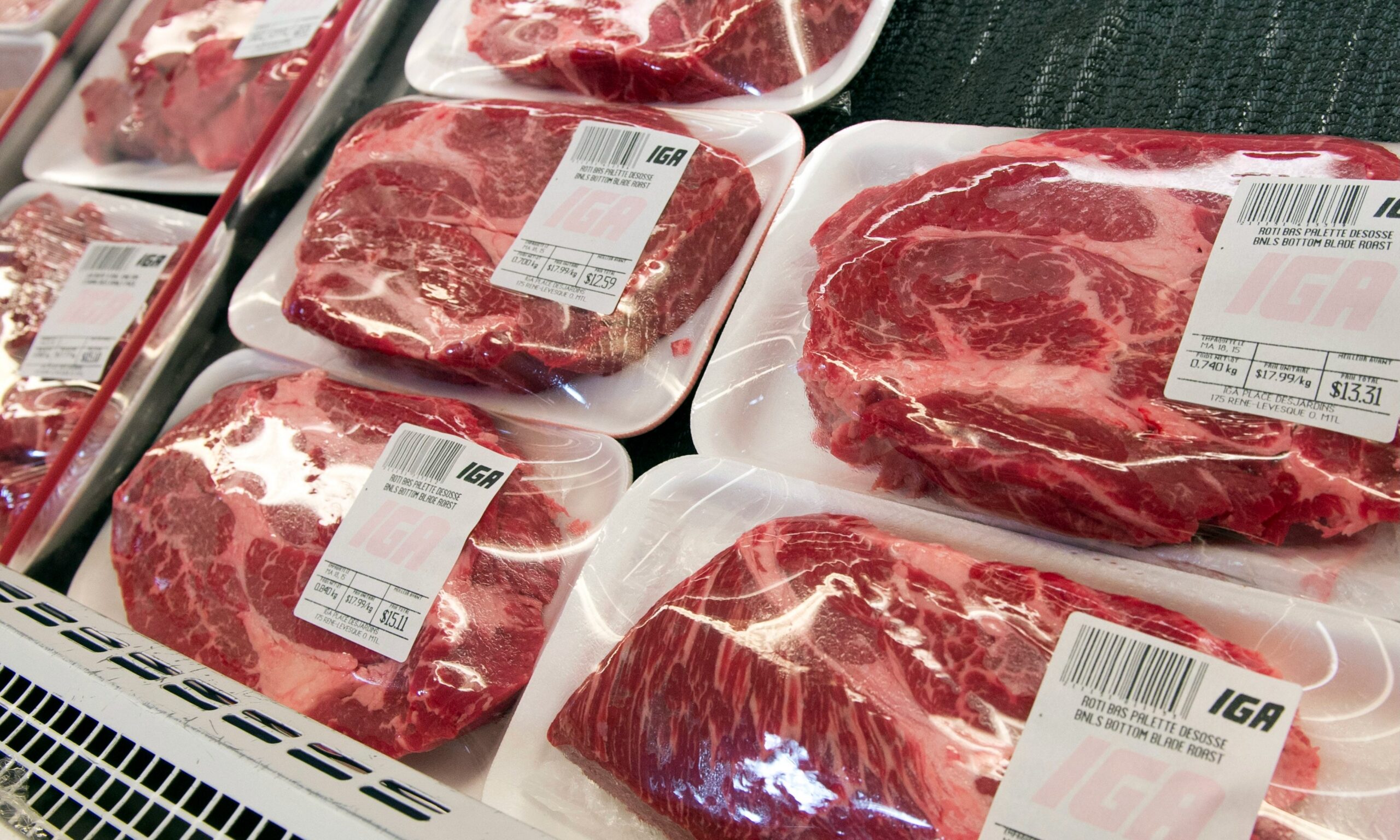
Trump’s bid to make ground beef cheaper reignites age-old labeling fight
Two weeks ago, when President Donald Trump posted on Truth Social that he was going to make ground beef cheaper because he’d struck a “deal” to import up to 300,000 metric tons of tariff-free beef to be sold at below-market prices, I think it’s fair to assume that the president knew it would upset American ranchers.
Top Trump administration officials have since argued that this move shows that Trump is trying to balance the needs of ranchers, who need to make a living, and American consumers, who are facing record high beef prices (demand is high and supply is low).
Election games: Officials didn’t come out and say it, but this is of course aimed at the midterm elections. The idea that you might be able to lower the cost of an all-American staple like ground beef sure sounds like a popular idea. The president even said the pause on tariffs would only last 90 days (so, until right after the election).
Fury: What may have started out as a simple-enough election strategy has quickly turned into a political nightmare for the White House. Ranchers are in full-blown revolt. I’ve never seen so much open, public criticism of President Trump from any sector of agriculture.
“What a slap in the face to American cattlemen & consumers. Worse than socialism!” wrote Rep. Thomas Massie (R-Ky.) who raises cattle and has been a big advocate for more local and regional meat processing while in Congress.
Industry groups like National Cattlemen’s Beef Association and the U.S. Cattlemen’s Association argued that a surge of imports massively undercuts domestic ranchers who are trying to rebuild the smallest cattle herd in decades (drought, market cycles, expensive inputs are all factors). Any move to depress beef prices would only make ranchers less likely to expand their operations, they argued.
In the days following this import announcement, the Trump administration has repeatedly tried to placate ranchers with announcements about potentially deregulating meat inspection requirements and creating new programs aimed at increasing the cattle herd, but the plans lack details and so far none of it seems to be doing much to put out this raging fire.
Sure doesn’t look good: The fury hit a new level this week after the Wall Street Journal reported that Brazilian billionaire Joesley Batista, who shares control of JBS, the world’s largest meatpacker, lobbied Trump to lower tariffs on beef imports as a way to bring down U.S. beef prices the day before his Truth Social post.
Per the report by Patrick Thomas, Natalie Andrews and Brian Schwartz: “Joesley Batista met with Trump in the Oval Office on Aug. 20, and they discussed how additional beef supplied from Brazil could help if Trump dropped a 26% import tax, according to people familiar with the matter. It couldn’t be learned who organized the meeting between Batista and Trump.”
Multiple news organizations have noted that JBS’ subsidiary, Pilgrim’s Pride, was the single largest donor to Trump’s inaugural fund.
Beef surplus: To be clear, the temporary import deal doesn’t just apply to Brazilian beef, but Brazilian beef stands to benefit tremendously from the deal. The White House and President Trump himself have repeatedly declined to answer press questions about where the tariff-free beef will come from.
It certainly seems like Brazil is about to have a whole lot of extra beef on its hands. The EU announced this week it’s suspending Brazilian meat imports over insufficient guarantees that the meat was not raised with antimicrobials used for growth-promotion and other restricted veterinary drugs, per Reuters.
Labeling enters the chat: It’s important to remember that the U.S. already imports beef from other countries. Something like 15 percent of the beef we consume is now imported. This isn’t new. But what is new is how much imported beef is now in the headlines — and facing a torrent of criticism on social media, where most consumers now get their information.
All of this blowback from ranchers (and plenty of concerned consumers) has now breathed new life into one of the longest-running fights in Washington — the question of whether meat companies should have to label which country the meat comes from. It’s called country-of-origin labeling, also known as COOL, or sometimes MCOOL if you’re talking specifically about mandatory country-of-origin labeling.
Consumers are often surprised to learn that we don’t have mandatory country-of-origin labeling, even though domestic ranchers want it. Fruits and vegetables and plenty of other agricultural products are subject to COOL requirements thanks to the 2002 farm bill, so you’ll notice it’s easy to find the origin on labels, but pork and beef are in a league of their own (weirdly chicken is labeled). We actually had mandatory COOL labeling for beef and pork circa 2009 to 2015, but Canada and Mexico challenged this policy under the World Trade Organization arguing that the mandatory labeling for beef and pork discriminated against imported livestock and violated standing trade agreements.
Under the threat of massive retaliatory tariffs, Congress ultimately repealed MCOOL for beef and pork in late 2015. Ranchers have been furious about this ever since. Now, they see a fresh opening to take another run at the issue.
R-CALF USA and the National MCOOL Coalition this week launched a new petition asking Congress and President Trump to restore mandatory COOL. The petition collected more than 6,000 signatures in just a few days.
The Consumer Federation of America is also backing the push on the grounds that consumers should know where their food comes from. “There is no excuse for keeping consumers in the dark,” the group wrote on X this week, urging consumers to sign the petition.
Agriculture Secretary Brooke Rollins this week suggested that the administration is thinking about moving toward mandatory country-of-origin labeling.
“Later this week I’ll be with President Trump and we’re gonna be talking about what we can do to move towards mandatory country-of-origin labeling while we wait on Congress to make the right move,” Rollins told Fox. The reporter then asked if she would urge Congress to do that. “100 percent,” she replied. “All Americans should know where their food comes from.”
On tap: Later today, Rollins is expected to appear at the White House with the president to sign an executive order aimed at quieting the rancher revolt, per reporting from Politico’s Grace Yarrow this morning:
“New policies to be promoted in an Oval Office ceremony are expected to include a slew of rancher-friendly priorities, including moves to implement country-of-origin labels on beef, bolster enforcement of anti-monopoly law and tweak rules around protected species like gray wolves that have threatened cattle herds, according to two people familiar with the plans, granted anonymity to discuss them. Industry leaders are also expecting details on Trump’s recent promise to allow ranchers to slaughter and process their own livestock. Ranchers can already do so legally on their farms but can’t sell self-processed meat without going through USDA inspections and other regulatory hurdles.”
It’s not clear that this will be enough to quiet the fury. Mandatory COOL is what ranchers really want, and this can’t be achieved by executive order. You need Congress for that. We’ve already seen a few rounds of announcements from this administration that were meant to mollify furious ranchers, but they just haven’t been working.
Strong words: This morning on CattleUSA Daily, well-known cattle auctioneer and livestock marketer John Campbell offered a blunt assessment of all these policy proposals.
“This is the second year in a row that our wonderful president has sh*tcanned the cattle market right at the beginning of the fall marketing season.” He called Trump’s initial Truth Social post on beef imports “unequivocally the most asinine statement ever made by a president.”
“You sh*tcan the market overnight and the best thing you can come up with is that we’re gonna allow ranchers to process their own cattle? There is no possible way that you can be that out of touch with what the h*ll is going on.”
“What a complete dipstick,” he added.
Stay tuned: I think beef prices and questions about labeling are likely to stay in the headlines in the coming weeks. This rollercoaster is not over.
***
What I’m reading
The truth about American food safety (The Atlantic). “The phrase When it rains, it pours isn’t one you like to see applied to outbreaks of foodborne illness, yet here we are,” writes Daniel Engber. “This flood of food-contamination events comes at just the time when our systems to prevent such outbreaks may be hobbled. Since last year, three cyclospora-research projects at the Department of Agriculture have lost either their funding or staffing, the CDC team that tracks the parasite’s genetics has nearly disappeared, and experienced government employees responsible for food safety have left their job or been fired. The bureaucracy is crumbling, and the produce aisle is a mess. But let’s be fair: The status quo on foodborne illness was never very good. Depending on how you measure outbreak numbers, the 2026 statistics have been pretty much in line with recent history. But one of this summer’s outbreaks does suggest that our ‘very small proportion’ might be growing into a slightly larger very small proportion.”
Should we be afraid of our food? (The Atlantic). “The cyclosporiasis outbreak that has garnered so much attention in recent months is unquestionably bad news,” Eric Schlosser writes. “But as foodborne illnesses go, a cyclospora infection—most likely caused in this instance by the consumption of iceberg lettuce contaminated with human feces—is relatively mild: unpleasant but rarely life-threatening. Other foodborne pathogens are far more dangerous. A generation ago, an outbreak of food poisoning generally remained small-scale. As the scale of industrial food production has grown, so has the scale of foodborne outbreaks. When I wrote my book Fast Food Nation, published in 2001, high levels of fecal contamination of ground beef were already a nationwide problem, not just a local one, because huge ground-beef-processing plants with poor safety procedures were supplying the fast-food industry. The dairy industry now presents similar problems of scale.”
US convenience stores say looming healthy food rule puts food stamps use at risk (Reuters). “Thousands of U.S. convenience stores could stop accepting food stamps unless the U.S. Department of Agriculture delays enforcement of a rule requiring those stores to stock more fresh produce and protein, according to a letter sent this week from nearly 250 stores to Agriculture Secretary Brooke Rollins,” reports Leah Douglas. “But the industry has not received adequate guidance from the USDA on how to meet the new compliance standards, according to the letter sent August 31 by the stores and their trade associations, the National Association of Convenience Stores, National Association of Truck Stop Owners and SIGMA: America’s Leading Fuel Marketers. The USDA in May issued a final rule that requires retailers accepting SNAP to meet the expanded stocking standards by November 4.”
As MAHA champions nutrition, it’s ignoring the experts, dietitians say (STAT). “Changing Americans’ nutrition has been among the Trump administration’s most prominent health policies since Robert F. Kennedy Jr. became health secretary,” write Lauren Chan and Isabella Cueto. “Some of the administration’s ambitious food goals, however — including expanding nutrition coaching in primary care and helping chronically ill people eat more fresh produce — may be harder to achieve, as they require an atrophying workforce: dietitians. Long-standing problems and new barriers are combining to make a career in dietetics less appealing and less financially feasible, just as the nation is increasing its appetite for nutrition in health care. So far, even the secretary’s MAHA movement — which emphasizes poor diet as a main driver of chronic disease — has done little to assuage dietitians’ deeply rooted troubles.”
The food stamp reform is working (Wall Street Journal). “Sorry to be the bearer of good news in these ill-tempered times, but fewer Americans are using food stamps,” writes the Wall Street Journal editorial board. “The main reason is that Congress’s reforms last year are causing states to police the rolls for abuse as they should have long ago. Food-stamp enrollment fell to 36.6 million from 42.3 million between May 2025 and May 2026, according to new U.S. Department of Agriculture data.”
***
Why you should upgrade to a paid Food Fix subscription
Become a paid subscriber to unlock access to two newsletters each week, packed with insight, analysis and exclusive reporting on what’s happening in food, in Washington and beyond. You’ll also get full access to the Food Fix archive — a great way to get smart on all things food policy. Sept. 4 is the last day to use coupon code HBD20 for 20 percent off a new subscription.
Expense it: Most paid subscribers expense their subscriptions through work. It’s worth asking!
Discounts: We also offer discounts for government, academia and students. See our subscription options. Individuals who participate in SNAP or other federal nutrition programs qualify for a free Food Fix subscription — just email info@foodfix.co.
Get the Friday newsletter: If someone forwarded you this email, sign yourself up for the free Friday edition of Food Fix. You can also follow Food Fix on X, Bluesky and LinkedIn.
See you again next week!