Happy Friday, and welcome to Food Fix. I’m loving the cooler temps in Washington, but a nor’easter in the forecast this early in the fall is kind of rude!
New Forked: If you’re into podcasts, this week Theodore Ross and I talked all about the farm bill, the state of Congress (and also ridiculously bougie bread). Listen and follow wherever you get your pods.
Don’t miss out: If you work in the food space and you’re not already getting Food Fix twice a week, you are missing out! Upgrade today.
As always, I welcome your feedback. Send me your thoughts by replying to this email, or drop me a line: helena@foodfix.co.
Alright, let’s get to it –
Helena
***
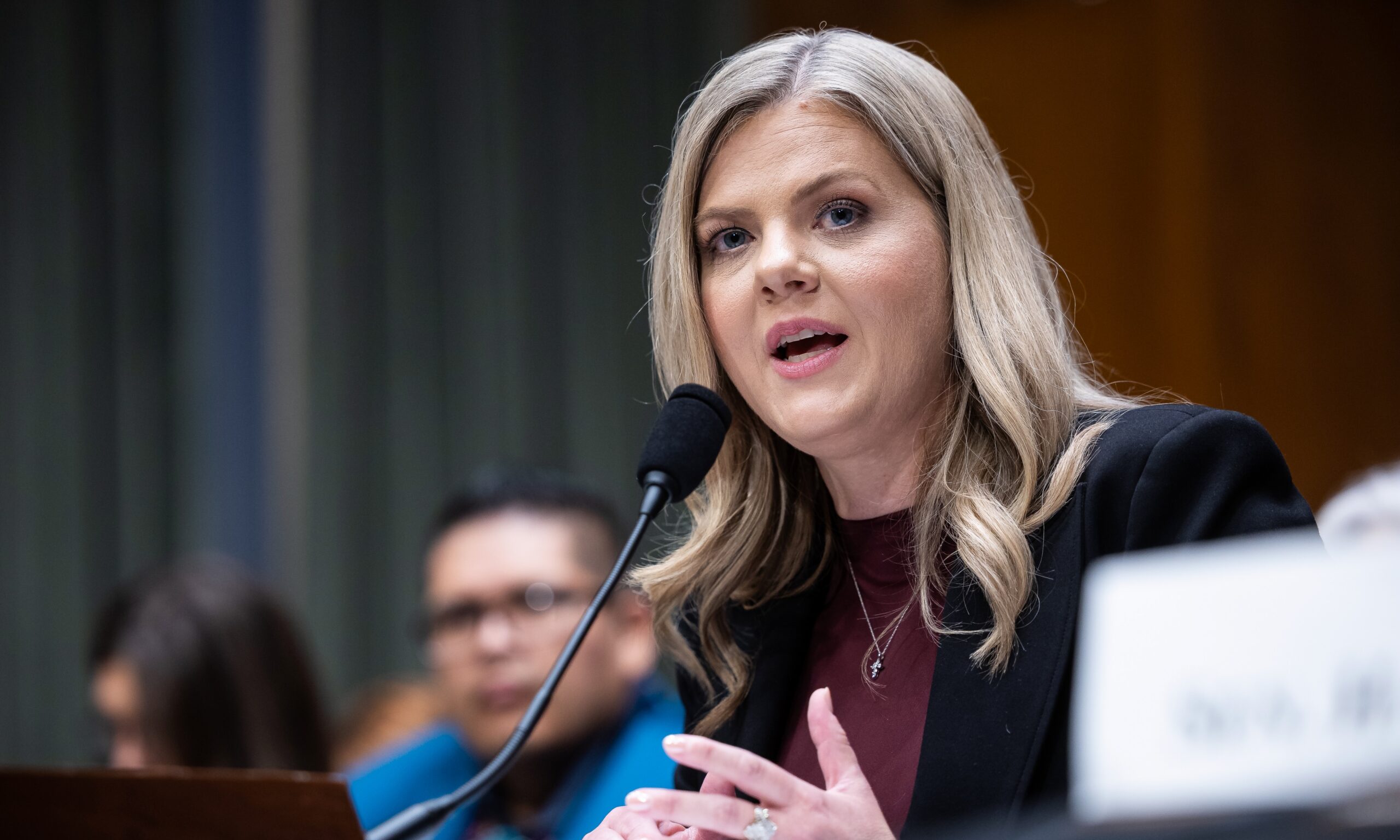
Four takeaways from Heidi Overton’s FDA confirmation hearing
If you’ve been around here a while, you know that food has long been something of a lower-profile issue within the universe of topics that fall under the Food and Drug Administration (FDA).
It’s always been a little awkward. The ‘F’ is right there at the beginning, but you still hear jokes in Washington about the ‘F’ being silent. And then there’s the former commissioners who have accidentally called it the “Federal Drug Administration” (yes, really). As I noted last year: FDA commissioner noms usually come in with a medical background and little to no (usually no) experience in food, even though the job includes jurisdiction over roughly 80 percent of the U.S. food supply.
President Donald Trump’s new pick to serve as FDA commissioner, Heidi Overton, fits this same pattern of most FDA noms: She’s a physician, a surgeon by training (notably worked closely with former FDA Commissioner Marty Makary at Johns Hopkins). She has a PhD in clinical investigation. She worked on the Domestic Policy Council during the first Trump administration, including on the Covid-19 response. She currently works at the White House as the deputy assistant to the president for domestic policy.
As Overton faced the Senate Health, Education, Labor and Pensions (HELP) Committee on Thursday for a nearly two hour confirmation hearing, she was incredibly evasive about her position on most policies, but I still learned some things and also got a temperature check on how the Senate is feeling on food issues. Here are four takeaways:
Food is a rising issue within the FDA-verse. The Senate is showing more interest in food issues at FDA. Just a few years ago, when FDA Commissioner Robert Califf faced this same committee, he got just one food-related question (on dairy labeling, at the behest of dairy farmers). This week, Overton fielded several questions, spanning from food additives to food safety inspections. Senate HELP Ranking Member Bernie Sanders (I-Vt.) came in hot with an opening statement expressing concern about the American diet.
“For decades, Congress and the FDA have allowed large corporations to make huge profits by enticing children and adults to consume ultra-processed food and beverages loaded up with sugar, salt and saturated fat,” Sanders said. “There is growing evidence that these foods are deliberately designed — deliberately designed — by these companies to be addictive similar to cigarettes and alcohol.”
Preemption is showing signs of life. The red-hot debate over whether Congress should pass a law to preempt the flurry of state laws banning food additives, imposing warning labels, etc., got a shot in the arm during the hearing. Food industry interests have been desperately arguing that Congress needs to pass preemption legislation to save the industry from a growing patchwork of state laws, but as I’ve previously written this legislative effort has struggled to gain real traction, in part because of intense MAHA opposition.
State leaders have argued that they are passing their own laws because the FDA isn’t doing enough to ensure the safety of the food supply. During the hearing, Sen. Jim Banks (R-Ind.) asked Overton about whether states had the staffing and expertise to be making these types of food safety decisions.
“There has been a lot of progress in the states,” Overton said. “I think it’s very important that when certain thresholds are met across states, there are times that it is appropriate to consider a national standard — a strong national standard — to have uniformity.”
“Uniformity” is a word that’s music to the industry’s ears. Americans for Ingredient Transparency (AFIT), the industry coalition that formed last year to push preemption, issued a statement after the hearing: “AFIT is encouraged that President Trump’s nominee for FDA Commissioner Heidi Overton supports a national standard for ingredient review and labeling,” said Andy Koenig, senior advisor to AFIT. “We look forward to continuing to work with the Trump administration and Congress to make it a reality.”
MAHA advocates, meanwhile, were furious. Vani Hari, known to many as Food Babe, took to X: “What a gift to BIG FOOD!”
“The states are where MAHA has been WINNING,” she added. “We cannot let ‘national standards’ become a backdoor way to protect the food industry from state legislation.”
The White House has not formally weighed in on the issue of preemption, but from what I understand there’s some internal infighting about the idea.
Nutrition is still struggling to break through. While food issues are climbing the ranks in FDA-world, nutrition issues are still struggling to land, even during a time when we’ve never seen more conversation around diet-related diseases in Washington. There were a lot of questions about food safety, inspections, additive oversight, etc. which makes sense, but good ol’ nutrition was barely mentioned.
At one point, Sen. Sanders asked Overton if she supported front-of-pack warning labels and limiting junk food marketing to kids, two things that were included in a bill that the HELP committee approved in July. (Warning labels would be under her jurisdiction. Marketing to kids would not.) She declined to answer the question.
“I support the goal of getting the best information to the American people,” Overton said. “I support increased food quality, transparency and safety.”
Loyalty vs. independence is a pressing concern. While the purview of this newsletter is food policy, my biggest takeaway from the hearing is much broader. The central question lawmakers seemed to wrestle with was this: Would Overton stand up to President Trump when needed? Would she stand with evidence, or would she do whatever the president asked? It wasn’t just Democrats that tried to get at this, Republicans also got in on this line of questioning. It’s a particularly relevant question, too, because Makary was reportedly ousted from this role for disagreeing with the White House on flavored vape policy and other issues.
Senate HELP Chairman Sen. Bill Cassidy (R-La.) in particular seemed very concerned about this idea of standing up to the president when needed. He repeatedly pressed Overton on whether she would stand up for FDA-approved products (like vaccines), even if the president publicly questioned their safety. Cassidy noted that HHS Secretary Robert F. Kennedy Jr. made promises to the committee that were ultimately not kept.
Cassidy repeatedly pressed some version of the same question: “If the president asks you to do something that goes against those guarantees you give us today, what will you do?” Cassidy appeared to grow frustrated with Overton’s lack of a direct response and ultimately gave up the line of questioning.
On the other side of the aisle, Sen. Sanders picked up the same thread. “The concerns that Sen. Cassidy raised are concerns that many of us have,” he said. “What I think the committee wants to know is whether you are going to have the courage to stand up to somebody who lies all of the time, who does not particularly believe in science, so that is the question: Will you have the courage to stand up to President Trump?”
During a particularly pointed exchange, Sen. Maggie Hassan (D-N.H.) asked Overton if it was possible for the president to ever be wrong about something. Overton refused to answer the question directly.
***
What I’m reading
RFK Jr.’s enhanced security was funded with money from minority health office (Wall Street Journal). “HHS informed congressional appropriators earlier this year that it was moving about $12 million from its Office of Minority Health to help cover the ballooning cost of security for Health Secretary Robert F. Kennedy Jr.,” reports Liz Essley Whyte. “The cost of security for Kennedy, a high-profile figure in the Trump administration whose father and uncle were assassinated in the 1960s, grew from roughly $10 million in fiscal year 2025 to $17 million in fiscal year 2026, some of the people familiar with the matter said.”
EPA, HHS partner on glyphosate study (Progressive Farmer). “With an updated risk assessment of glyphosate expected to be completed early next year, the EPA and HHS on Tuesday announced a plan to expand the volume of information available in making that evaluation,” Todd Neeley reports. “Under a memorandum of understanding, the agencies expect to exchange scientific information, identify research gaps and expand research into potential human health effects of glyphosate, according to a news release from the agencies. Glyphosate is the active ingredient in Roundup. The agreement on glyphosate comes about one year after the first MAHA Commission report said glyphosate and other pesticides may have negative health effects on children. A second MAHA report, however, recommended no change in how pesticides are regulated.”
Has MAHA become mainstream? (Farm Bureau). “Although support for MAHA has cooled a bit as the label becomes increasingly politicized, the movement’s impact is unmistakable,” writes Kari Barbic. “In fact, recent polling shows that most Americans are not immune to MAHA’s influence as it continues to shape consumer perceptions. From an influx of discussions around how our food is grown and processed, MAHA has left many Americans concerned about, or at least questioning, what is safe and healthy for themselves and their families. Thankfully, trust in farmers and ranchers remains high. How can farmers and others in agriculture jump into the discussion, build on that trust, and address growing concerns? Is it too late?”
Trump officials weigh rolling back beef import plan as GOP midterm panic spreads (Politico). “A small group of White House officials is exploring whether to cut back President Donald Trump’s decision to increase foreign beef imports, as GOP panic rises ahead of the midterms,” Meredith Lee Hill. “The proposal to reduce the amount of imports is being discussed within the Domestic Policy Council headed by Vince Haley, a longtime Trump speechwriter and former campaign official, and a few other officials. Trump officials are unsure if anything will come of the talks. The two people said the Office of the U.S. Trade Representative disagrees with cutting back the imports, since it aims to lower high consumer beef prices in the short term and since USTR helped implement the move. But their conversations about partly rolling back the beef policy — which Trump instituted in August — is a clear sign the White House is trying to stem the alarm from battleground and farm-state Republicans as high prices and Trump’s tariffs roil their election campaigns.”
A top Texas smokehouse is cutting brisket from its menu amid soaring beef prices (Washington Post). “Last week, Andrew Soto learned the wholesale price of his brisket had increased by $1 a pound, a dramatic leap even at a time of soaring beef costs across the country,” writes Tim Carman. “The owner and pitmaster behind Butter’s BBQ in Sinton, Texas figured he would need to charge customers $51 a pound to justify keeping brisket on the menu. The increase would represent more than a $10 markup. ‘That was the final straw that broke the camel’s back,’ Soto said in an interview. ‘I’m not charging that.’ So, the owner did something drastic in a state where brisket is considered king among pitmasters and patrons alike: Soto decided to take the cut off his menu, even though it’s his top-selling item. Soto’s decision was fueled not just by the skyrocketing price of brisket but by inflation that has increased his costs across the board, he said. These economic pressures have been too much for numerous smokehouses in Texas.”
Eating more ultra-processed foods linked to worse health, study finds (ABC News). “Eating more ultra-processed foods is linked to higher health risks, including death, according to a new study published in Family Medicine and Community Health,” report Ava Tsapatsaris and Ashley Thomas. “Researchers found that consuming higher amounts of ultra-processed foods was associated with an increased risk of heart disease, strokes, obesity, diabetes, depression and anxiety, digestive issues and cancer. Ultra-processed foods contain ‘significant amounts of added sugars, salts, fats’ and can be hyper-palatable, meaning they are engineered to taste especially appealing, Maya Feller, a registered dietitian, told ABC News. In the study, researchers examined the intake of ultra-processed foods globally, by reviewing over 50 studies that evaluated the diets of nearly 9 million adults worldwide over a timeframe ranging from 2 to 32 years.”
Kennedy drew $4 million in book advances from publisher who also monetized MAHA (New York Times). “Health Secretary Robert F. Kennedy Jr. accepted $4 million in book advances and more than $270,000 in gifts over the past year from close allies who are working to advance his MAHA agenda, according to his latest financial disclosure form,” reports Christina Jewett and Sheryl Gay Stolberg. “Ethics experts said the financial relationships may violate federal rules barring officials from profiting from their government position, and call into question the secretary’s ability to remain independent and impartial. The advances were for two books that will be published by a company owned by Tony Lyons, a longtime friend and business associate of Mr. Kennedy who also sits atop a constellation of MAHA-related entities, including some that accept political contributions and corporate sponsorships from health-related companies.”
More than 167,000 pounds of meat with false inspection labels recalled nationwide (CNN). “More than 167,000 pounds of meat are being recalled across the United States after being produced without proper federal inspection, according to USDA,” Laura Sharman reports. “The items were ‘produced without the benefit of federal inspection, bearing labels with a false USDA mark of inspection,’ the USDA said. The products beared the number “EST. 1363,” which does not have a federal grant of inspection, and should be considered misbranded and unsafe to eat, the agency said. This recall has been classified as class I, the highest health risk.”
***
Why you should upgrade to a paid Food Fix subscription
Become a paid subscriber to unlock access to two newsletters each week, packed with insight, analysis and exclusive reporting on what’s happening in food, in Washington and beyond. You’ll also get full access to the Food Fix archive — a great way to get smart on all things food policy.
Expense it: Most paid subscribers expense their subscriptions through work. It’s worth asking!
Discounts: We also offer discounts for government, academia and students. See our subscription options. Individuals who participate in SNAP or other federal nutrition programs qualify for a free Food Fix subscription — just email info@foodfix.co.
Get the Friday newsletter: If someone forwarded you this email, sign yourself up for the free Friday edition of Food Fix. You can also follow Food Fix on X, Bluesky and LinkedIn.
See you again next week!