Happy Friday, and welcome to Food Fix. Today marks the 25th anniversary of 9/11, a tragic day I will never forget. As horrifying as that day was, the sheer number of heroic stories always leaves me with a feeling of hope, too. I recently watched Boatlift, a short documentary about how everyday boat captains evacuated hundreds of thousands of people from Manhattan that day, in what became known as the largest maritime evacuation ever.
Happy birthday: The incomparable Marion Nestle, longtime food politics author, thought leader, professor, and always a clever quote turned 90 this week. I was able to join the launch event for her new book, “Sugar Coated: Unboxing the Hidden Forces Shaping America’s Favorite Breakfast Food,” co-authored with food industry veteran Lisa Sutherland, held at NYU on Tuesday. It was a real treat — I can’t wait to read this one.
Forked is back: The podcast I co-host with Theodore Ross over at the Food & Environment Reporting Network is back this week with a new episode all about the beef politics rollercoaster as of late. Tune in and subscribe.
As always, I welcome your feedback. Send me your thoughts by replying to this email, or drop me a line: helena@foodfix.co.
Alright, let’s get to it –
Helena
***
Robert F. Kennedy Jr. urges voters to stick with GOP to keep momentum
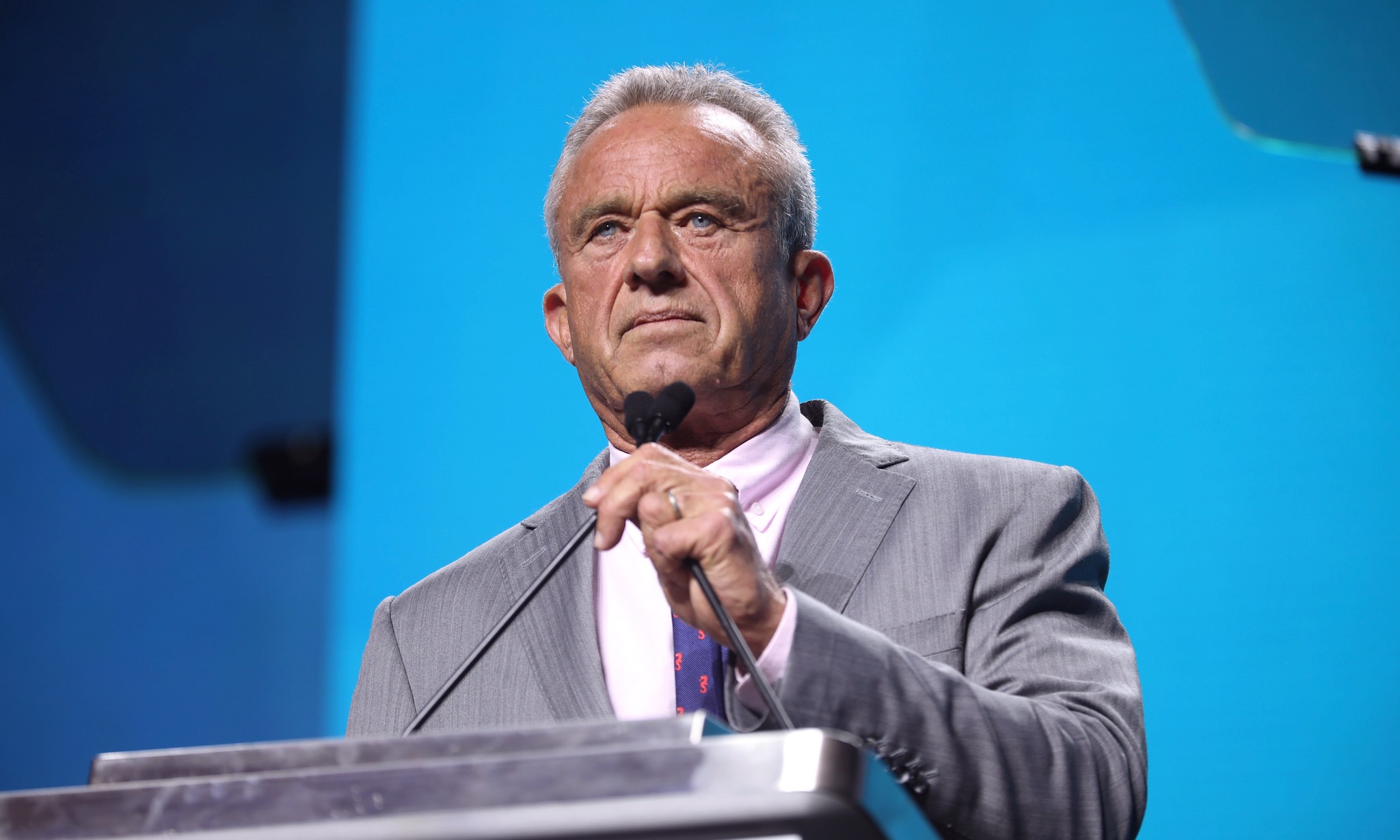
HHS Secretary Robert F. Kennedy Jr. delivered a clear message to voters at the GOP’s midterm convention in Dallas last night.
“We are making America healthy again,” Kennedy said, during his speech which was given prime-time billing. “It’s up to you now. We need to elect a Republican Congress to keep this momentum going.”
Key context: It’s super unusual to have a midterm convention — usually parties hold conventions during presidential cycles — but this year the Republican party is trying something a little different. Polling certainly has given the party plenty to worry about heading into the midterms: Everything is incredibly expensive. President Donald Trump is deeply unpopular. The Iran war is even more unpopular. But the midterm convention has been upbeat, and Republicans seem to be making zero attempt to distance themselves from the president.
“I’m asking you to pretend that I’m on the ballot,” Trump said during a speech Wednesday night. The president also vowed during the speech to send a $5,000 “dividend” to every American citizen after the midterms if Republicans keep the House and Senate — a promise that many critics (and even some fans) said sounded like a bribe.
“If the Republicans win, you win with us, and you get $5,000,” the president said.
Setting the scene: Ahead of Kennedy’s speech Thursday night, the crowd was treated to an old “God gave us Trump” video — a riff off of the old Paul Harvey “So God Made a Farmer” speech that was later turned into an iconic Ram truck commercial. Right before Kennedy took the stage, the audience danced to “Macho Man” by Village People, and I spotted a couple of MAHA hats among the party faithful.
Eyes on 2028: I watched Kennedy’s speech to get a sense of how he’s positioning the MAHA agenda in his pitch to GOP voters. Kennedy has been zigzagging the country in recent weeks stumping for vulnerable Republican members of Congress — the Washington Post reported Thursday night he’s even getting a military plane to help get him from point A to point B.
For the first several minutes of the speech, however, Kennedy didn’t really talk about MAHA — he spent it torching the modern Democratic party, going point by point where he felt the party had essentially trampled the Bill of Rights. “Neither my father nor my uncle would recognize the Democratic Party of today,” Kennedy said.
At this point in the speech I thought: Oh, he’s running for president. (Of course, Kennedy, 72, has said he’s not running in 2028, but I maintain there is no way you can watch the speech he gave last night and not think he’s at least testing the waters.)
Applause line: Interestingly, one of the biggest applause lines of Kennedy’s speech was him doubling down on his alliance with Trump.
“Some of my Democratic friends told me I was a fool for trusting President Trump, so I want to make the record clear right now: President Trump has kept every single promise that he made to me, without exception,” Kennedy said.
This line is sure to raise eyebrows among some grassroots MAHA advocates who are deeply frustrated that the Trump administration has sided squarely with industry on many of their top issues, from pesticides to pollution. Even relatively tame parts of the MAHA food agenda, like defining (not regulating but defining) ultra-processed foods, are hitting roadblocks at the White House right now amid intense industry opposition. The frustration runs deep. (If you want to go deeper on this, the podcast Why Should I Trust You? hosted a panel discussion on this and what might come next for the MAHA movement last week.)
Fact checks: During his speech, Kennedy said that “real food sales” were up 8 percent in 2025. I have seen retail data that aligns with this general trend, however, I’m told there’s been a significant pullback in 2026, especially in fresh produce due to the disastrous cyclospora outbreak this summer and a steady drumbeat of recalls and foodborne illness investigations. Just today, Kroger reported that the cyclospora outbreak hammered produce sales nationwide. (Psst: If any of you have good retail data for 2026, I’d love to see it!)
“Americans are eating less processed food,” Kennedy said. I think this is likely true. Depending on how you slice the data, sales are lagging across many ultra-processed food (UPF) categories, but UPFs still dominate the overall American diet.
Kennedy noted that obesity is down by 7 percent since Trump took office “after 40 years of increasing.” He didn’t say it was due to the administration’s policies, but as I’ve written before, many experts attribute the decline in obesity to the broad adoption of GLP-1 medications, which, it should be noted, this administration has helped make more affordable.
Kennedy also said he recently received preliminary data from CDC that “indicates that we have now reversed a 30-year decline in longevity.” I’d love to see this data.
What’s next: It will be interesting to see the extent to which Republicans (and in some cases Democrats) use MAHA talking points in their election pitches. In a way, the midterms are MAHA’s first big political test after helping Trump win the presidency in 2024. Do these issues actually matter to voters facing a broader affordability crisis? Can the GOP hang on to the MAHA faithful while not following through on many of their policy promises? Only time will tell.
***
What I’m reading
Boozman set to hold another committee farm bill vote next week (Politico). “Senate Agriculture Chair John Boozman (R-Ark.) is planning to hold another committee vote on his farm bill plans next week, in a new attempt to squeeze the farmer-friendly policies through to the full chamber ahead of November’s midterms,” reports Grace Yarrow. “The panel first met in early August to debate and vote on the GOP-led package. But the legislation stalled due to opposition from committee Democrats and the continued absence of Sen. Mitch McConnell (R-Ky.) from the Capitol. Boozman hasn’t set a firm date for a committee meeting next week, he told POLITICO on Thursday. He recessed the committee before the Senate’s summer break so he could call them back for another vote without a lengthy amendment and debate process.”
Cyclospora outbreak followed years of declining FDA foreign inspections (AP). “A nationwide outbreak of cyclospora tied to contaminated lettuce has heightened safety concerns about imported food, while underscoring a longer-term trend: U.S. regulators are conducting fewer international inspections to catch contaminated produce before it lands on American plates,” reports Matthew Perrone. “Food and Drug Administration inspections of foreign food sites — including the Mexican farm linked to the ongoing outbreak — are down nearly 35% since 2019, the year before the COVID-19 pandemic, according to agency records reviewed by The Associated Press. The pandemic kicked off a wave of retirements and departures among FDA inspectors that continues to this day. Even before COVID-19, the agency had long failed to hit its congressionally mandated targets for international inspections. And recent staffing cuts, reorganizations and other upheavals under President Donald Trump could mean even fewer inspections in the years ahead.”
Kennedy promised children’s health reforms. Here’s how he did. (New York Times). “Last September, Health Secretary Robert F. Kennedy Jr. released the government’s ambitious plan to improve the health of American children, promising reforms that he said would have been ‘unthinkable two years ago’ and pledging to carry them out ‘very, very quickly,’” report Dani Blum and Alice Callahan. “The highly publicized ‘Make Our Children Healthy Again’ report laid out more than 100 goals, some that medical experts praised as worthwhile and many others that they dismissed as unscientific, potentially harmful or unlikely to improve children’s health. The New York Times assessed the progress on the central promises in the four areas the report outlined — ‘poor diet,’ ‘chemical exposure,’ ‘lack of physical activity and chronic stress’ and ‘overmedicalization’ — and documented actions from the administration that have contradicted some of those goals.”
Op-ed: The U.S. has fewer cows but we don’t have a beef shortage (Civil Eats). “Americans are being told repeatedly that the country has a cattle shortage,” writes Katie Tonn. “Yes, the U.S. beef cow herd is at its lowest level since 1961, and yes, grocery-store beef prices have climbed to record highs. But while the explanation seems straightforward—fewer cattle, less beef, higher prices—that’s not really what is happening. The country does have a small herd, the result of myriad factors, including drought, hay shortages, and an aging demographic of ranchers. That doesn’t mean we have a cattle shortage. In fact, we are producing more beef from fewer cattle, and consumers continue buying it at historically high prices. Policymakers trying to make beef more affordable should stop treating cattle numbers as the problem and start asking what happens to prices between the ranch and the meat case. Counting cows doesn’t tell us how much beef the U.S. produces. The problem, then, is more complicated than too few cattle chasing too many consumers.”
USDA takes new SNAP waiver approach following court ruling (Food Dive). “The USDA asked South Carolina, North Dakota and Ohio to push back implementation of waivers that would ban SNAP participants from buying certain foods such as candy and soda, according to the states,” Catherine Douglas Moran reports. “South Carolina and Ohio said the USDA asked for the delay to allow the federal government enough time to seek public comments on both states’ waivers. The USDA told South Carolina it is requesting the delay as both its general counsel and the Justice Department continue to review and analyze a federal district court judge’s ruling earlier this year that vacated similar SNAP food restriction waivers in five other states.”
Cereal has strayed too far (The Atlantic). “Breakfast-cereal boxes are a window into both the politics of food and American culture,” write Marion Nestle and Lisa Sutherland. “As a particularly timely example, since Robert F. Kennedy Jr. took office last year as secretary of health and human services, he has called for the removal of artificial dyes from breakfast cereals. Cereal companies responded right away. For the MAHA movement, the removal of artificial dyes is a big win. But cereal still comes with a major concern for many consumers. Nearly all ready-to-eat breakfast cereals sold in the United States—and especially those marketed to children—are presweetened.”
California approves first statewide non-ultraprocessed food label (Food Dive). “California lawmakers approved a ‘non-ultraprocessed certified’ seal for food manufacturers under a landmark state measure,” Sarah Zimmerman reports. “It also requires grocers to more prominently display cleaner label options for consumers. The bill, which still needs the governor’s approval, establishes a certification process for a voluntary label that can be used on products that do not fall under the state’s definition of ultraprocessed foods established last year. The legislation comes as more third-party certifiers debut non-ultraprocessed labels for food companies, often with conflicting definitions on what makes a product clean label. Modeled after the ‘USDA Organic’ seal, California’s non-ultraprocessed label is meant to provide consumers with a ‘trustworthy way to identify healthier options,’ according to bill sponsor Assemblyman Jesse Gabriel.”
The shallow iconoclasm of HHS leadership (The Dispatch). “Robert F. Kennedy Jr. and his allies at the HHS are tired of talking about measles,” Grayson Logue writes. “In the weeks before and after the controversy over the recent measles-associated deaths in Lancaster County, Pennsylvania, HHS officials were characterizing the focus on the spread of the world’s most contagious disease as a campaign by media and Democrats to distract from the toll of chronic disease. Despite leading a sprawling department responsible for overseeing the nation’s federal public health agencies, Kennedy continues to operate like an outsider, railing against the very system he administers. Faced with growing outbreaks, Kennedy and his allies alternate between claiming the spread is insignificant, solely the fault of their predecessors, or being sensationalized to distract from the MAHA agenda. They consistently fall back on amplifying institutional distrust, but the refrain betrays a lack of progress in fighting both infectious and chronic disease.”
***
Why you should upgrade to a paid Food Fix subscription
Become a paid subscriber to unlock access to two newsletters each week, packed with insight, analysis and exclusive reporting on what’s happening in food, in Washington and beyond. You’ll also get full access to the Food Fix archive — a great way to get smart on all things food policy.
Expense it: Most paid subscribers expense their subscriptions through work. It’s worth asking!
Discounts: We also offer discounts for government, academia and students. See our subscription options. Individuals who participate in SNAP or other federal nutrition programs qualify for a free Food Fix subscription — just email info@foodfix.co.
Get the Friday newsletter: If someone forwarded you this email, sign yourself up for the free Friday edition of Food Fix. You can also follow Food Fix on X, Bluesky and LinkedIn.
See you again next week!