Happy Friday, and welcome to Food Fix. It’s never my first choice to have multiple newsletters in a row about the same topic — particularly when it involves parasites and explosive diarrhea — but I can’t control the news so here we are.
New this week: Food Fix is recommending Semafor, and Semafor is recommending Food Fix — a sign of mutual newsletter admiration!
What Washington reads to stay ahead: Semafor Washington, DC is a daily briefing trusted by those who shape policy and power. In an era of deep polarization and global uncertainty, each edition delivers rare clarity that illuminates the conversations within Congress, the West Wing and the discreet spaces of power where decisions are made. Sign up here for sharp analysis and unbiased reporting every morning.
Food Fix on air: I joined two NPR segments this week to dig into consumer questions about the cyclospora situation: On Tuesday, I did WAMU’s 1A with Caitlin Rivers of Johns Hopkins Bloomberg School of Public Health and Natasha Bagdasarian, Michigan’s chief medical executive. On Wednesday, I did KQED Forum with Peter Chin-Hong of UCSF and Brenda Goodman of CNN.
Stay in the loop: You know the drill by now: The best way to make sure you don’t miss a beat in food policy is to upgrade to a paid subscription and get Food Fix in your inbox twice per week. Almost everyone who upgrades finds it valuable.
As always, I welcome your feedback. Send me your thoughts by replying to this email, or drop me a line: helena@foodfix.co.
Alright, let’s get to it –
Helena
***
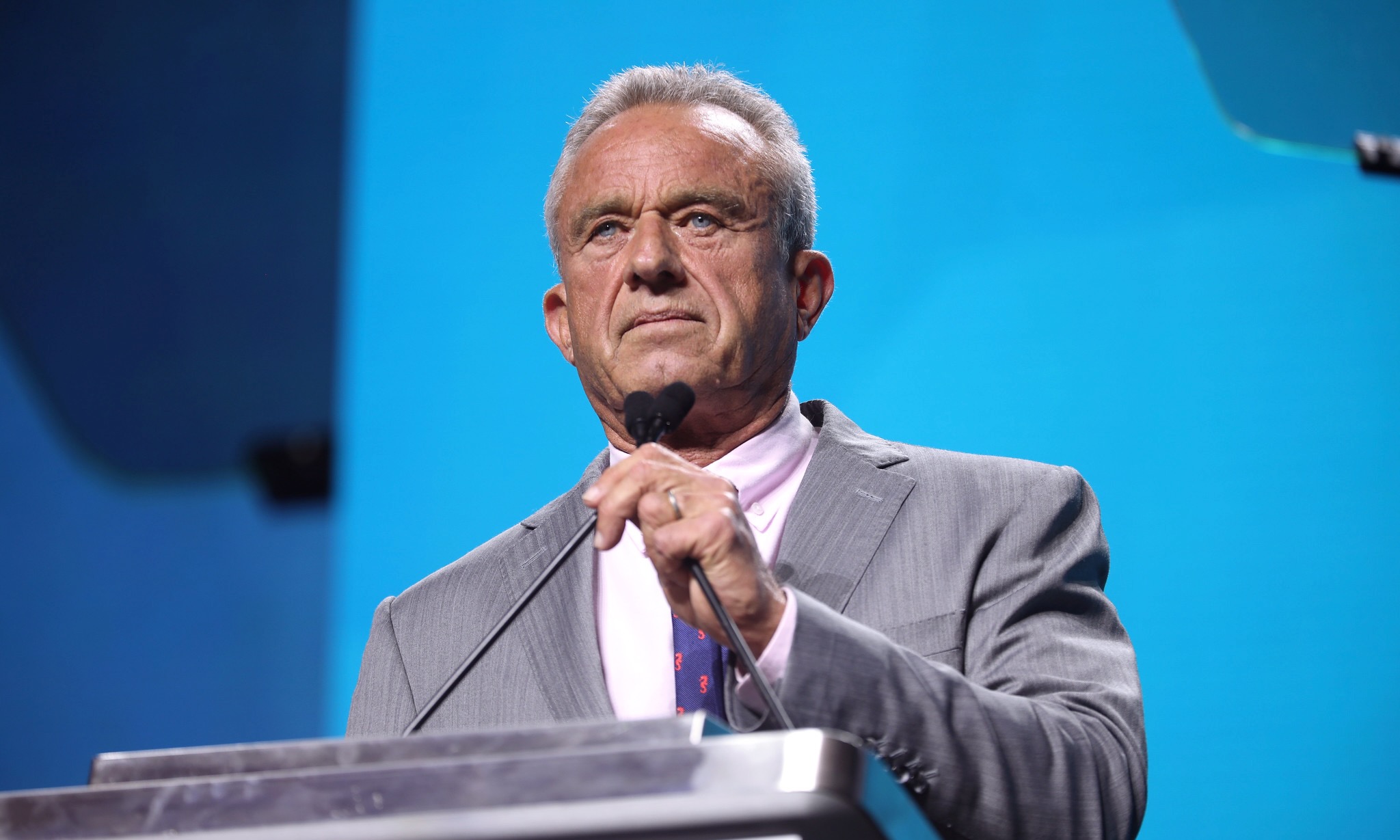
RFK Jr. says the cyclospora outbreak is ‘under control.’ It’s not.
HHS Secretary Robert F. Kennedy Jr. this week finally addressed America’s raging cyclospora outbreak — you know, the one that’s put “explosive diarrhea” across countless headlines and cable chyrons.
Kennedy was at an event to talk about cracking down on health care fraud, something the administration would like to talk about, but the secretary couldn’t escape cyclospora, something the administration would rather not talk about.
Elizabeth Schulze with ABC News asked Kennedy if the federal government had the outbreak under control.
“We do have the outbreak under control,” the secretary said, without hesitating. “We have done extensive forensics, epidemiological forensics, and we’ve identified the source of the outbreak and the companies that are involved have implemented a recall.”
To be clear, the outbreak (or rather outbreaks) are not under control. FDA says it is currently investigating six cyclospora clusters, including the large outbreak tied to iceberg lettuce from Taylor Farms de Mexico (that’s since been recalled across 27 states). Just this morning, CDC announced it has now connected more illnesses and states to this outbreak, bringing the total to more than 1,900 cases across nine states. Of the six cyclospora outbreaks under investigation, two outbreaks have already ended without a source being identified.
Michigan — which is part of the nine-state outbreak tied to Taylor Farms iceberg lettuce — now has more than 8,100 cyclosporiasis cases, though we do not know exactly what portion of these are tied to iceberg versus some other source. Michigan alone has been logging something like 500 new cases every day. I’ve never seen anything like it.
If you tally up all of the cyclospora cases across the U.S. — though these are ostensibly not all tied to one source — we are nearing 12,000 cases of parasitic illnesses. This is not under control. This is a disaster.
Cyclo season: To be fair, this isn’t our first bout of cyclospora. We now have a fairly reliable cyclospora season in the U.S. — roughly from May to August — and we’ve steadily seen an increase in cyclospora cases over the past decade. We’ve had multiple outbreaks under both Democratic and Republican administrations where a source was never identified or was identified far too late to be useful to consumers. But what’s happening now is many times worse than anything we’ve seen before.
Uniquely hard: Everyone agrees that cyclospora is a really difficult bug to investigate. Cyclospora can make you sick up to two weeks after you eat the contaminated food. It is hard to test for — it’s kind of like looking for a needle in a haystack. Cyclospora “eggs” — known as oocysts — need certain conditions, like those in our gut, to replicate. These microscopic buggers also cling to produce in small quantities and resist typical disinfectants like chlorine (yikes).
“If this is what being under control looks like, I don’t want to see an outbreak that’s out of control,” said Sandra Eskin, CEO of Stop Foodborne Illness, a non-profit that advocates on behalf of victims of foodborne illness. “I don’t know how he can say things are under control when there have been massive layoffs at FDA, funding cuts and changes at CDC — every step that’s been taken has degraded our ability to respond quickly to an outbreak.”
What cuts? Top Trump administration officials have pushed back forcefully on the idea that their cuts to public health staffing and funding have hampered the response. Kennedy himself pushed back on that this week when he was asked about the outbreak at the health care event.
“Those criticisms are invalid,” Kennedy said. “We’ve had no cuts in our surveillance program. We did cuts in the FoodNet program, but they were for the redundant surveillance, and all the states will tell you that.”
This first part is just not true. There have been serious cuts to surveillance capacity. The CDC alone has pulled back more than $11 billion in Covid-era federal funding to state and local health departments, which are the backbone of this type of surveillance; CDC’s staff that works on parasitic diseases has been decimated; the CDC overall has lost 25 percent of its staff.
The FoodNet comment is a little more complicated. It’s true that cyclospora cases are still reported into CDC’s National Notifiable Diseases Surveillance System. FoodNet is a different active surveillance system that acts more like the report card we use to grade how we’re doing on food safety overall — like trends in illnesses. The Trump administration did eliminate mandatory reporting for cyclospora from FoodNet. While FoodNet isn’t designed for outbreak detection, experts say dropping cyclospora means public health officials have less data to understand how the current outbreak compares with past trends.
Cyclo confusion: As I wrote earlier this week, there has been so much confusion about these outbreaks, the lettuce recall, which products are to blame, what we know and don’t know, whether or not produce is safe to eat, and on and on. People are understandably confused and angry.
For what it’s worth, I’m still eating fresh fruits and vegetables. I am in Washington state right now, where no lettuce (nor other products) have been recalled, and we are not seeing a surge in cases here. I wash everything thoroughly, even though that doesn’t work all that well against those pesky cyclo “eggs” (gross), it’s still a good idea. Keep an eye on public health warnings and recalls. If you’re worried, sourcing more locally is a reasonable step to take. Switching from bagged lettuce to whole head lettuce is a reasonable step to take. But the truth is, nothing is risk-free when you’re eating fresh produce. For most, the benefits are still going to outweigh the risks, but that calculation is different for everyone.
I’ve seen a lot of people pledge that they’re fully off fresh fruits and vegetables. If you’re going to give up fresh produce over cyclospora, you may have to prepare to do that every spring and summer. I’m very concerned that we could start to see outbreaks this large every year. I really hope this is not our new normal.
***
What I’m reading
More than 19 million eggs voluntarily recalled over potential salmonella contamination (ABC). “Midwest Poultry Services has voluntarily recalled nearly 1.6 million dozen eggs — approximately 19 million individual eggs — due to the potential for salmonella contamination, the company said in an announcement shared on the U.S. Food and Drug Administration website Wednesday. The white shell eggs and brown cage free shell eggs were produced in Texas and have ‘sell by’ or ‘best by’ dates between July 20, 2026, and Aug. 17, 2026, according to Midwest Poultry Services. The recalled eggs were available at Kroger locations in Texas and Louisiana; Brookshire Grocery stores in Texas, Oklahoma, Arkansas, Louisiana, New Mexico, and Mississippi; and ‘other smaller retail outlets,’ the company said.”
Cassidy will support Trump’s CDC nominee (Politico). “President Donald Trump’s nominee to lead the CDC, Erica Schwartz, secured a key vote from the Senate Health Committee’s chair, Bill Cassidy (R-La.), who had for days refused to say if he would support her,” Simon J. Levien and Sophie Gardner report. “Cassidy also said that ‘as a sign of good faith’ the health department modified its website that said ‘vaccines do not cause autism’ was not an evidence-based claim. As of Thursday morning, a modified disclaimer is still there. During her confirmation hearing last week, Cassidy questioned whether Schwartz would stand up to her potential boss, Health and Human Services Secretary Robert F. Kennedy Jr., a longtime vaccine skeptic, if he asked her to take action at odds with scientific evidence. Cassidy’s decision marks a win for the Trump administration. In Cassidy’s May primary, Trump endorsed a challenger, Rep. Julia Letlow (R-La.), who ultimately won the GOP nomination.”
Judge rules Trump administration must stop terminating USDA grants (Civil Eats). “In a decision that has broad implications for farmers, agricultural research, and the food system, a federal judge ruled last week that federal agencies can no longer terminate grant contracts based on the determination that the grant ‘no longer effectuates the program goals or agency priorities,’” Lisa Held reports. “The case was brought by 23 states and the District of Columbia. In the decision, a judge in the U.S. District Court of Connecticut determined that the sections of the law being used to justify cancellations ‘do not allow terminations of awards based on new program goals or agency priorities that an agency identifies after granting the award.’ While all administrations reshape government spending based on their priorities, President Donald Trump is the first to oversee sweeping cancellations of already-signed legal contracts. At USDA, that has led to the termination of numerous grants and entire programs, stymieing efforts to get food from small farms into schools and food banks, rebuild regional supply chains, and implement climate-smart farming practices.”
The White House pushes healthy eating. It cut a landmark nutrition education program (NPR). “Wholesome eating is a central part of the Trump administration’s efforts to Make America Healthy Again,” writes Joe Hernandez. “But a landmark nutrition education program for recipients of federal food assistance and other low-income people will cease to exist within weeks after President Trump eliminated it last summer when he signed a massive Republican spending and tax bill. For decades, [SNAP-Ed] has funded programs such as community cooking classes, farmers markets in low-income neighborhoods, school nutrition lessons and more in every U.S. state. The program is a ‘pillar of the public health infrastructure in the US,’ according to a report published in the Journal of Nutrition Education and Behavior. The decision to end SNAP-Ed at a time of rising food prices and the Trump administration’s push for healthy eating has mystified nutrition advocates and public health experts alike.”
Brian Mast introduces bill to protect infant formula quality (The Floridian). “Congressman Brian Mast (R-Fla.) has introduced a bill to ensure baby formula remains safe during manufacturing by establishing a federal standard through FDA,” Joseph Quesada reports. “The legislation aims to amend the Federal Food, Drug, and Cosmetic Act, requiring the FDA and the Secretary of HHS to develop and ‘enforce maximum containment levels in infant formula.’ Rep. Mast’s effort comes after the FDA launched ‘Operation Stork Speed,’ an initiative seeking to broaden options for ‘safe, reliable, and nutritious infant formula for American Families.’ Through ‘Operation Stork Speed,’ the FDA increased testing of specific contaminants in baby formula and other foods that children consume.”
FDA revokes Orange B, proposes ending Citrus Red No. 2 use (Quality Assurance). “The U.S. Food and Drug Administration (FDA) has revoked the authorized use of Orange B as a color additive in food and is proposing to revoke the authorized use of Citrus Red No. 2 in food. FDA is proposing to revoke the authorization for Citrus Red No. 2 because it has tentatively concluded that the additive’s use has been abandoned by industry. Citrus Red No. 2 has been authorized since 1959 for coloring the skins of mature oranges. The final order revoking the use of Orange B was released following an evaluation of public comments on the proposed action. FDA said it did not receive information that changed its conclusion that the additive’s authorized use has been abandoned by industry.”
***
Why you should upgrade to a paid Food Fix subscription
Become a paid subscriber to unlock access to two newsletters each week, packed with insight, analysis and exclusive reporting on what’s happening in food, in Washington and beyond. You’ll also get full access to the Food Fix archive — a great way to get smart on all things food policy.
Expense it: Most paid subscribers expense their subscriptions through work. It’s worth asking!
Discounts: We also offer discounts for government, academia and students. See our subscription options. Individuals who participate in SNAP or other federal nutrition programs qualify for a free Food Fix subscription — just email info@foodfix.co.
Get the Friday newsletter: If someone forwarded you this email, sign yourself up for the free Friday edition of Food Fix. You can also follow Food Fix on X, Bluesky and LinkedIn.
See you next week!