Happy Friday, and welcome to Food Fix. We’ve got a fresh episode of American Dish out this week. I talked to Ilana Golant, the founder and CEO of Food Allergy Fund, about the race to understand our growing food allergy epidemic and how funding is not keeping pace with the scale of the problem.
Don’t miss out: The best way to make sure you don’t miss a beat in food policy is to upgrade to a paid subscription and get Food Fix in your inbox twice per week. Almost everyone who upgrades finds it valuable.
As always, I welcome your feedback. Send me your thoughts by replying to this email, or drop me a line: helena@foodfix.co.
Alright, let’s get to it –
Helena
***
What we know so far about the growing cyclospora outbreak
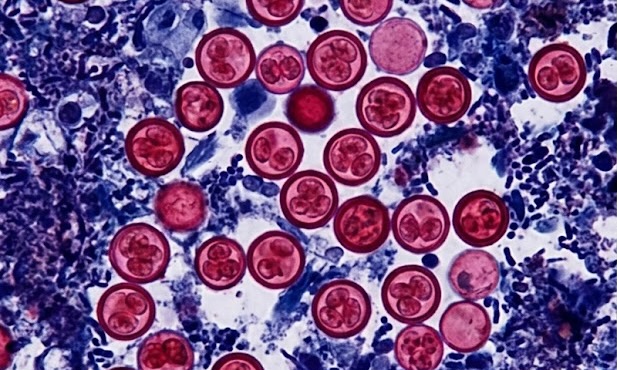
The U.S. appears to be in the throes of one of the largest cyclospora outbreaks on record.
You’ve probably seen the headlines about the “explosive diarrhea parasite” by now, even if you’ve been afraid to read the stories. Cyclospora is shorthand, by the way, for Cyclospora cayetanensis, which is a single-cell parasite that causes cyclosporiasis. It’s usually transmitted by fecal contamination of some sort (many foodborne pathogens are).
I’ve been getting a lot of texts from friends and family: How worried should we be about this? Are we supposed to stop eating vegetables? Is there anything you’re not eating right now? I’m used to these kinds of questions after more than 15 years covering food safety — my first reporting job was actually at Food Safety News, where I covered every foodborne illness outbreak under the sun.
Interestingly, when I first started covering food safety cyclospora wasn’t something I wrote about. It just wasn’t a common issue in the U.S. Things have changed. Let’s start with what we know about this current outbreak.
Ballooning case count: More than 1,200 people in Michigan have been diagnosed with cyclosporiasis, state health officials said Thursday — an absolutely massive foodborne illness outbreak for one state. The source or sources of contamination haven’t been pinpointed, but the Michigan Department of Health & Human Services is now recommending that food processors, restaurants and consumers step up their sanitation practices for handling raw produce.
At the same time, more than two dozen other states are also investigating a spike in cyclospora cases. At least four other states have reported more than 100 cases: New York, Ohio, Illinois, and North Carolina.
Guessing game: Since we don’t have a produce item (or items) that’ve been identified, Michigan health officials included a list of some of the raw items that have been implicated in past cyclospora outbreaks: bagged salad mixes and kits (pre-cut lettuce blends with romaine, iceberg, red cabbage, carrots), fresh cilantro (coriander leaves), fresh basil, raspberries, snow peas and green onions (scallions). The lack of information has sparked a torrent of speculation and sleuthing from consumers online — hordes of people on Threads are sure they’ve identified the source (bagged lettuce), but this is totally unverified.
It’s tricky to pinpoint what’s causing this for a couple reasons. First, you can get sick up to two weeks after you eat the contaminated food. (Most people can’t accurately recall what they ate yesterday.) Second, health officials can’t rely on genetic testing to figure out which cases are connected (apparently the parasite is really difficult to work with in the lab). Third, many state and local health departments are short-staffed in part because federal funding has dried up.
Tracking holes: In addition to not knowing the source (or maybe sources), we don’t have a good handle on how many cases there are right now nationally. It may seem like Michigan is the “epicenter” of the cyclospora outbreak, but we don’t actually know that, as CIDRAP aptly noted this week. One factor at play here is the Trump administration’s recent cutbacks on how foodborne illnesses are tracked.
“As of July 1, 2025, FoodNet, the main foodborne illness surveillance arm of the Centers for Disease Control and Prevention (CDC), made tracking Cyclospora optional,” per CIDRAP. “Currently state health departments are required to survey for just two pathogens: Salmonella and Shiga toxin–producing Escherichia coli (STEC), which cause the largest foodborne illness outbreaks in the United States. Some states, including Michigan, have maintained Cyclospora surveillance.”
Latest from CDC: As of July 1, CDC reported that there were only 145 cases nationwide through June 16, which was obviously extremely out of date. This morning, however, CDC updated its case count to 843 cases, including 86 hospitalizations across 31 states.
“CDC is aware that states are likely to report higher case counts of cyclosporiasis than reflected in CDC data and is working closely with states to update numbers as additional cases are confirmed,” the agency said in its update today. “Since May 1, 2026, CDC has received reports of 843 confirmed domestic cases of cyclosporiasis and is aware of more than 1,500 cases that require further analysis to confirm the illness as domestically acquired cyclosporiasis. So far this year, multiple states have reported an increase in cases in the last two weeks compared to the same period in 2025.”
Emerging problem: Zooming out from our current diarrheal disaster, cyclospora has steadily been becoming more of a food safety concern in the U.S. over the past decade or so. Not long ago, this was considered primarily an issue with imported produce from places with more tropical climates. That’s still a challenge, but we’re also now having outbreaks with domestic produce.
One theory is that warming temperatures are shifting where cyclospora thrives. Climate scientists have long warned that temperature changes will change pathogen risk patterns, and it’s possible that’s what’s happening here. We just don’t know. What we do know is that we now basically have a cyclospora season in the U.S. — late spring and summer — and we’re in it now once again.
What I’m eating: Because cyclospora is now a regular seasonal occurrence, I’ll be honest that I don’t really change what I’m eating when I see that this parasite is back. If a source were identified, I would certainly heed that! I do wash fruits and vegetables before eating them (though this probably won’t get rid of cyclospora because the parasite has a tough outer shell to protect itself). Unfortunately, this is a situation where we don’t have good information to act on yet. If you want to trust crowd-sourced internet sleuthing, it might make sense to avoid bagged salads until we know more — but again, this hasn’t been verified.
Hopefully, health officials will get to the bottom of this so we can prevent future outbreaks, but until then it’s parasite season.
***
What I’m reading
A mom said infant formula killed her baby. The manufacturer closed the file. (KFF Health News). “In September 2016, a distraught mother sent infant formula maker Mead Johnson a message: ‘It is because of your animal based pre-term artificial baby food crap that you peddle to hospital NICU’s that my son is dead from NEC,’” David Hilzenrath and Holly K. Hacker write. “The mother was referring to neonatal intensive care units and necrotizing enterocolitis, an often fatal condition in which intestinal tissue can die and allow infection to spread through the body of an infant born prematurely. In an internal memo, Mead Johnson cited its ‘extensive quality and safety checks’ and concluded there was ‘not a reasonable possibility’ that the formula caused the baby’s death. ‘No further investigation is needed. This file can be closed,’ the memo said. And with that decision, the company narrowed the chance that the mother’s anguish could draw attention to any danger the formula might pose to other infants.”
HHS urges hospitals to take ‘Make Hospital Food Healthier’ pledge (Washington Times). “The MAHA agenda is gaining a sub-movement: Make Hospital Food Healthier, an initiative calling on hospitals to revamp their food service,” Mary McCue Bell reports. “Health and Human Services Secretary Robert F. Kennedy Jr. unveiled the pledge this week, aimed at aligning hospital food and nutrition programs with the Dietary Guidelines for Americans, promoting ‘real food.’ Hospitals are now encouraged to limit or eliminate deep-frying, ultra-processed foods, sugar-sweetened beverages, added sugars or artificial additives, processed meats and foods high in added sodium. A pledge goes hand in hand with the new initiative, in which hospitals can sign a form committing to making ‘nutrition a core part of patient care.’ The form says that by using ‘evidence-based dietary practices to strengthen food service programs,’ hospitals can ‘support recovery, improve patient outcomes, reduce complications, and help build healthier communities.’ It is unclear what incentives hospitals have for joining.”
Trump cut to food security survey could make measuring US hunger harder (Reuters). “President Donald Trump‘s cancellation last year of a government food security survey could make it difficult to assess whether his cuts to the food stamp program lead to a rise in U.S. hunger, especially among children,” reports Leah Douglas. “Trump’s tax and spending law signed last July shifted significant SNAP spending to states and expanded work requirements, among other changes. Trump, last September canceled the USDA’s survey, which for 30 years served as a measure of a household’s access to enough food for a healthy lifestyle. At the time, the USDA called the survey, which officials used to inform policy and agency programs, ‘redundant, costly, politicized, and extraneous,’ in a press release. Yet that report was the ‘gold standard’ for understanding food access, said Craig Gundersen, an economist at Baylor University. Without that data, experts said, understanding whether hunger will rise as a result of Trump’s changes to SNAP is much more difficult.”
The White House killed an RFK Jr. ad campaign. He can blame Kristi Noem. (NOTUS). “Robert F. Kennedy Jr. had big plans for his much touted ‘Take Back Your Health’ campaign last year,” reports Paige Winfield Cunningham. “The Health Department he leads requested bids for ‘bold, edgy’ pitches for TV and digital ads warning about the dangers of processed foods. Kennedy wanted to appear in ads wearing a device used by diabetics to track blood sugar. None of it ever came together. Former Homeland Security Secretary Kristi Noem had rained on Kennedy’s parade. Two sources familiar with the internal conversations told NOTUS that the reason why the campaign fell apart goes back to the immigration-related ads Noem filmed while DHS secretary.”
As MAHA clashes with courts, is RFK Jr’s food policy agenda on life support? (FoodDive). “Brash and full of bravado, Health Secretary Robert F. Kennedy Jr. and his allies in the Trump Administration took the food industry by storm in February of last year by promising to Make America Healthy Again,” writes Sean McBride in an opinion piece. “The force and scope of MAHA’s actions, supported by a grassroots movement of mothers, stunned policy experts and food companies alike. That was then, and this is now. While the politics of food remain a mess and provide little reprieve for the targets of MAHA’s ire, the courts are providing answers. Federal judges, through their rulings, have gutted large swaths of MAHA’s agenda, shooting down key initiatives on food dyes, SNAP, food additives, and pesticides. None of this is good for the MAHA movement. With Congress mired in election year politics, it is quite possible the courts will remain the only check on bad food policy ideas from MAHA for the remainder of the Trump administration.”
The evidence against “ultra-processed” foods is weaker than you think (Vox). “In little more than a decade, the term ‘ultra-processed foods’ (UPFs) has risen from an obscure academic coinage to one of the most potent ideas in the American food imagination. It has saturated media coverage of diet and disease, spawned a profusion of guides teaching shoppers how to spot UPFs at the supermarket, and animated Robert F. Kennedy Jr.’s crusade to remake American food policy. It might also be kind of fake,” writes Marina Bolotnikova. “The trouble starts with the definition. UPF generally refers to packaged foods with questionable-sounding ingredients not typically used in household kitchens (high-fructose corn syrup, maltodextrin, and the like). But not even nutrition scientists can really tell you where normal processing ends and ‘ultra-processing’ begins, and the difference often comes down to vibes.”
Newsom highlights major education investments as CA budget increases funding for schools statewide (ABC7). “California’s newly signed state budget includes major investments in public education,” reports David González. “Gov. Gavin Newsom announced the education funding initiative Thursday, days after signing the state’s budget for the upcoming fiscal year. The California Department of Education said the budget includes critical investments in public education, including securing record per-student funding, expanding community schools and guaranteeing universal meals for students.”
***
Why you should upgrade to a paid Food Fix subscription
Become a paid subscriber to unlock access to two newsletters each week, packed with insight, analysis and exclusive reporting on what’s happening in food, in Washington and beyond. You’ll also get full access to the Food Fix archive — a great way to get smart on all things food policy.
Expense it: Most paid subscribers expense their subscriptions through work. It’s worth asking!
Discounts: We also offer discounts for government, academia and students. See our subscription options. Individuals who participate in SNAP or other federal nutrition programs qualify for a free Food Fix subscription — just email info@foodfix.co.
Get the Friday newsletter: If someone forwarded you this email, sign yourself up for the free Friday edition of Food Fix. You can also follow Food Fix on X, Bluesky and LinkedIn.
See you next week!