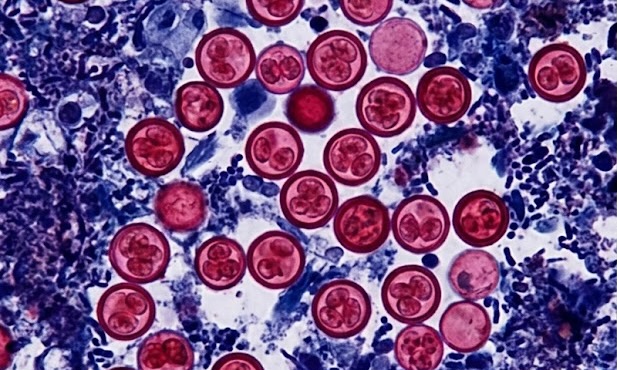
Happy Tuesday, and welcome to Food Fix. Each day I think to myself: Today, I will not focus on cyclospora. Surely something else will be more newsworthy… Alas, the cyclospora outbreak(s) are still rapidly expanding and dominating the news, and I am right back on the outbreak beat.
Share Food Fix: Do you have a colleague who needs to read Food Fix? Make sure they get their own subscription, or create a group for your organization – it’s easy to upgrade in our portal! If you need help, just reach out: info@foodfix.co.
As always, I truly welcome your feedback. Send me your thoughts by replying to this email, or drop me a line: helena@foodfix.co.
Alright, let’s get to it –
Helena
***
Today, in Food Fix:
– The latest on the cyclospora disaster
– USDA sends school meals proposed rule to OMB
***
Navigating a very confusing cyclospora news cycle
If you’re trying to keep up with the unprecedented cyclospora outbreak(s) in the U.S. and you’re confused, you’re not alone.
I cannot even count how many headlines, news stories and social media posts in the past 48 hours I’ve seen that are misleading or just flat out wrong. We are simply awash in bad information.
Mistakes were made: The FDA on Saturday announced that it had found cyclospora during an import screening test of Taylor Farms iceberg lettuce from Mexico. Now, this was a big deal, particularly because the lettuce FDA tested was not part of the 27-state recall Taylor Farms announced on Friday – meaning the test could have indicated a broader problem and would have almost certainly demanded an even bigger recall.
By Sunday, FDA had reversed course and announced that, actually, the test was a false positive: “Due to the complexity in detection of Cyclospora, FDA laboratory experts re-reviewed the sample results and have concluded that the finding does not represent true amplification and should be considered a false positive,” the agency said.
It’s never good when a public health agency like the FDA makes such a mistake, of course. But it’s essential that when mistakes are made, they are corrected. The problem is that many in the media (and in the public) misinterpreted this correction to mean that Taylor Farms was not the source of the outbreak.
PR fail: Taylor Farms, for their part, contributed greatly to the confusion. The company issued a statement on social media claiming that the FDA had apologized to the company, something FDA officials later denied. The statement, which sort of made it seem like the company had nothing to do with this outbreak, has since been taken down. (Taylor Farms has not responded to requests for comment, by the way.)
Fact check: Just so everyone is clear: Shredded iceberg lettuce from Taylor Farms de Mexico has still been implicated in the five-state cyclospora outbreak that spans Indiana, Kentucky, Michigan, Ohio and West Virginia. The recall sparked by that outbreak investigation, which spans lettuce distributed in 27 states, still stands.
FDA officials held a call with reporters on Monday and tried to clear up the chaos that had broken out. They acknowledged and explained the false positive, but clarified that it didn’t change anything about the investigation’s findings nor the iceberg lettuce recall.
Corruption chatter: While FDA stuck to its guns on pinning this five-state outbreak to Taylor Farms, I’ve seen a ton of speculation online that the Trump administration is giving the company a break because of political donations. It’s true that Taylor Fresh Farms Inc. donated $1 million in March to MAGA Inc., a super PAC supporting President Donald Trump, but I have no reporting to suggest that this donation had anything to do with the false positive, nor the company’s treatment in this investigation. It certainly looks bad, but public health officials still appear to be following the evidence, as they should be. (If you know anything different here, I’m on signal at hbottemiller.11.)
I asked the White House about the MAGA Inc. line of criticism as well and have not heard back yet. The HHS Rapid Response account on X dismissed it as “FAKE NEWS” late Monday.
“Nothing influences our decisions except science and the safety of the American people,” the post said.
Taylor Farms also recently donated $1 million to the Congressional Leadership Fund, which supports Republican candidates in the House, per reports. These are large sums, but it’s also pretty common for agricultural companies to give to Republicans.
Latest case count: As all of this conflicting and often confusing information continues to swirl online, the scale of this cyclospora disaster (likely multiple outbreaks) continues to expand. We’re closing in on something like 10,000 reported cases across the U.S., though we still do not know how many of these cases are linked together. Michigan alone added more than 1,000 new cases over the weekend, which is a bad sign.
“We’ve investigated five different subclusters since the start of this [cyclospora] season in May,” said acting FDA Commissioner Kyle Diamantas on Monday during a call with reporters. “Three of those investigations are already considered over.”
Unfortunately, those investigations ended without a cause being identified to the public – and unfortunately, too, this is not uncommon with cyclospora. It often takes a really long time to nail down these outbreaks because the incubation period is so long (up to two weeks after contaminated food is consumed) and it’s such a difficult parasite to track.
Investigation 101: There seems to be a misconception out there that the FDA needs to get a positive test in lettuce to link Taylor Farms to this five-state outbreak. They do not. Having a positive product test would make this investigation easier, but in foodborne illness outbreaks, we often don’t get positive product tests, especially not for highly perishable products like lettuce. Think about it: By the time investigators figure out the likely source, the products have either already been eaten or tossed, well past expiration.
It’s common to rely on other epidemiological evidence, as FDA and CDC are doing here, which includes extensive interviews with patients, searching purchase histories and then traceback investigations to figure out where products came from. Cyclospora is also really hard to find using product testing. It will be interesting to see if investigators find it in the water or in the environment as they continue seeking how the contamination likely occurred.
More recalls? I joined NPR’s 1A program this morning as part of an hour-long panel to talk about this whole cyclospora situation – the current outbreaks, cyclospora season, and what it all means for food safety in the U.S., etc. One thing that Michigan’s chief medical executive Natasha Bagdasarian said during the discussion stood out to me. She said she’s concerned that there may need to be more recalls because many of the cases they’ve seen in Michigan didn’t report iceberg lettuce consumption. State and local health officials have conducted nearly 3,000 interviews with those sickened as part of the investigation, she said.
“My concern is that the outbreak is bigger than the recall,” Bagdasarian told NPR. She noted that in New York, for example, the state has reported several hundred cyclospora cases but Taylor Farms’ iceberg lettuce recall did not include products sent to New York.
Bottom line: I hope we get more answers and more clarity soon. In the meantime, this is a public health communications disaster that will probably be studied for a long time.
***
USDA sends school meals proposed rule to OMB
The USDA on Monday sent its proposed rule to update school meal nutrition standards to the White House Office of Management and Budget for review – the last step before the proposal can be publicly released.
The move comes as many major MAHA priorities have lost momentum in Washington amid intense industry pushback. Agriculture Secretary Brooke Rollins had originally said the administration planned to get this proposal out in the spring, but the timeline was pushed back.
“This rulemaking proposes changes to adjust meal pattern and monitoring requirements in the Child Nutrition Programs,” per the regulatory notice. “The purpose of these customer-focused changes is to ensure meal patterns are aligned with the goals of the Dietary Guidelines for Americans 2025-2030 and help State and local program operators overcome operational challenges that limit their ability to manage these programs efficiently. Implementation of the wide range of proposed changes is expected to improve the nutritional quality of the meals served, simplify operational requirements, reduce food waste, increase efficiency, and make it easier for State and local program operators to provide nutritious meals to children and adult participants.”
What’s next: The review process at OMB is supposed to take 90 days or less but can often extend much longer than that. Once the proposal clears OMB, USDA will release the proposal for public comment. After that point, USDA has to review and respond to all the comments before the rule can be finalized. It will likely be years before any of this is implemented in schools.
***
What I’m reading
Trump imposes 50 percent tariff on Canadian imports (BBC). “U.S. President Donald Trump has signed an order imposing a 50% tariff on a wide range of goods imported from Canada, in retaliation for what he called ‘unequal treatment’ of U.S. cars, dairy and alcohol,” report Nadine Yousif, Francisco Velasquez and Peter Hoskins. “Everyday consumer items like wine and hockey sticks and industrial goods such as cement are among the goods targeted. However, several key exports will be spared, such as energy, potash, critical minerals and fish. … The White House said the duties would take effect in 30 days. It marks a major escalation in trade tensions between the North American neighbours.”
FDA lowers orange juice sugar standard — officials say it will boost Florida citrus (Florida Phoenix). “Florida’s once thriving citrus industry has declined precipitously over the past two decades, but state agriculture officials believe the downward trajectory may have plateaued, and expressed enthusiasm Friday regarding a federal rule change they say will provide a much needed boost to the struggling sector,” reports Mitch Perry. “U.S. Health & Human Services Secretary Robert F. Kennedy Jr. announced the change at Bonnet Springs Park in Lakeland. The FDA, he said, was lowering the federal standard for pasteurized orange juice, a change designed to give U.S. citrus growers and juice processors more flexibility after years of crop losses tied to disease and severe weather. … The rule change would reduce the minimum soluble-solids requirement for pasteurized orange juice from 10.5% ‘Brix’ to 10%. In orange juice, Brix is the scientific unit used to measure the percentage of soluble solids (primarily natural fruit sugars) relative to water.”
What did they eat? Here’s how one case of cyclosporiasis was solved. (New York Times). “The leading suspect, it seemed, was the cilantro. Weeks before an outbreak of cyclosporiasis, now traced at least in part to iceberg lettuce, laid low thousands of Americans this summer, the New York City Health Department investigated a smaller outbreak. Testing labs and doctors notified the city that people were coming down with the intestinal illness, which is caused by a parasite and can result in explosive diarrhea and other types of gastric distress. The New York investigation back in April – one of multiple case clusters the city’s disease detectives have pursued this year – led to cilantro,” writes Andy Newman. “The city’s work is only one link in a chain that also involves state and federal disease surveillance efforts, but it helps illustrate how complicated it can be to pinpoint sources of contamination in a global food-supply system.”
New rule ties potential green card approval to SNAP benefits (Civil Eats). “The Trump administration finalized an immigration rule last week that food access advocates say could have a chilling effect on immigrant households seeking federal benefits,” Rebekah Alvey reports. “In a final rule published Monday in the Federal Register, the DHS and U.S. Citizenship and Immigration Services (USCIS) rescinded a Biden-era rule on ‘public charge’ evaluations for green card applicants. Under the Trump rule, immigration officers can consider whether an applicant received benefits from the SNAP, along with other federal assistance. Previously, agents only considered whether an applicant received cash assistance like Temporary Assistance for Needy Family or Supplemental Security Income from Social Security. Under the final rule, receiving SNAP benefits, housing vouchers, or Medicaid could hurt someone’s chances of receiving a green card. The DHS estimated that about 588,000 applicants per year would be subject to the public charge review, according to the November 2025 proposed rule. But the agency estimates about 950,000 individuals would disenroll from federal benefits as a result of the new rule.”
Trump’s rancher allies push Rollins to reopen border to cattle (Politico). “The Trump administration’s strategy for warding off a flesh-eating pest threatening the American beef industry is rapidly losing allies,” reports Grace Yarrow. “Closing the southern border to Mexican livestock imports last year became a pillar of Agriculture Secretary Brooke Rollins’ effort to slow the northward advance of the New World screwworm while the Trump administration weathered criticism over high beef prices. … Trump-friendly business leaders are pulling back, and she’s found herself at odds with other Trump administration officials, especially those seeking to boost beef imports. … Rollins has struggled to convince lawmakers and other critics in Texas that USDA is doing everything it can to stop the pest’s advance. She has blamed the Biden administration and argued that her efforts delayed the pest’s arrival by a year. However, last year’s DOGE-led policies shrank staffing at USDA’s top animal health agency, and Trump administration spending reviews further delayed key facilities that would help contain the screwworm.”
Big food is running out of moves with shoppers and investors (Wall Street Journal). “America’s biggest food companies have tried everything to win shoppers back,” writes David Wainer. “They’ve cut prices, ramped up marketing and added protein to everything from Cheerios to Goldfish. It hasn’t worked.”
***
Thank you for supporting original food reporting
Your subscription makes Food Fix possible, so thank you! If someone forwarded you this email, go subscribe online. Some friendly housekeeping reminders:
– You can manage your subscription at any time.
– If multiple people in your organization need to read this newsletter, it’s time to upgrade to a group account or add seats.
– Regular forwarding of the Tuesday subscribers-only newsletter is a violation of our terms of service. (Plus, it’s way easier to get it delivered directly to your inbox!)
And don’t miss out between editions: Follow Food Fix on X, Bluesky and LinkedIn.
See you Friday!